
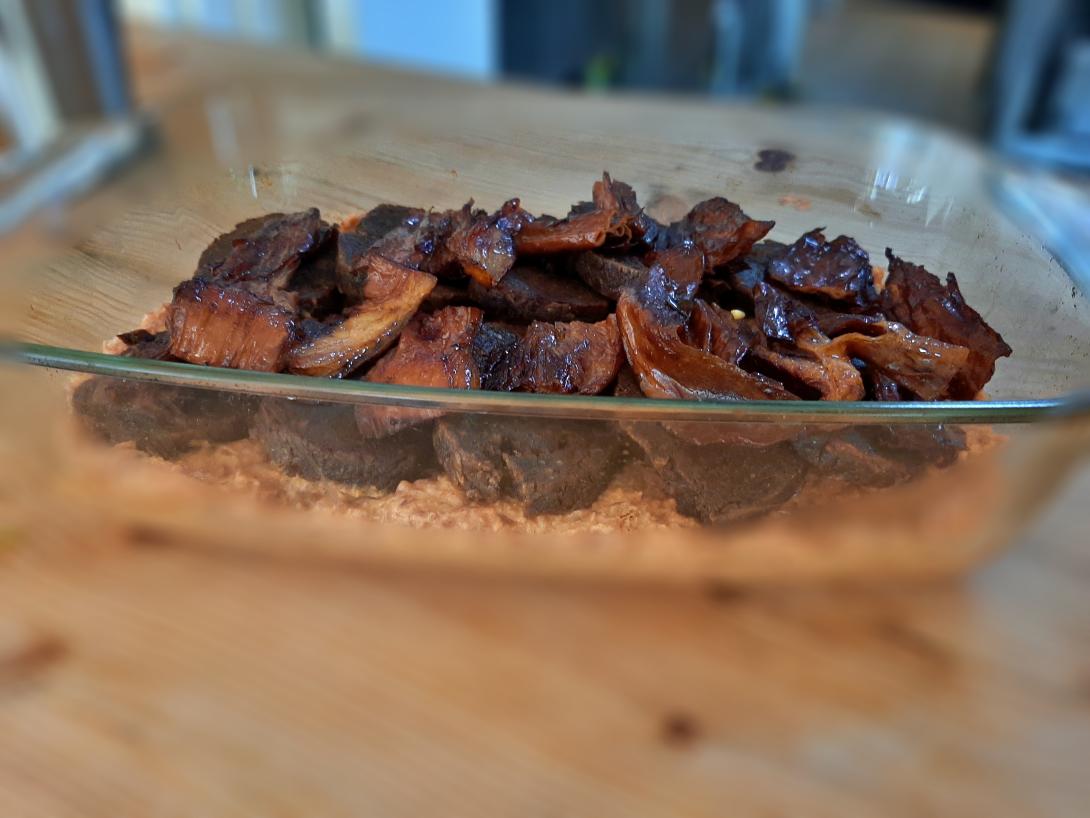
A high-protein meal is one where at least 20% of the energy comes from protein. That’s the legal definition in the EU and the UK, and it’s the bar I use here. Below are 20 Rude Kitchen recipes that clear it and 4 more that sit just below it (18–19%). All meat-free, all from a working chef’s kitchen, with the protein per serving counted.
TL;DR: the threshold is 20% of energy from protein. The top scorers are seitan (43%), traditionally roasted soymeat (41%) and banned cottage cheese (35%). Dishes at 18–19% are marked just below the threshold. The numbers are estimates, ±20%, not lab results.
What is a high-protein meal?
The clearest definition comes from Regulation (EC) No 1924/2006. A product may say “high protein” on the label if at least 20% of its energy value comes from protein. At 12% it may only say “source of protein”. The UK kept the same rule after Brexit.
In the US, “high protein” on a label means something else: at least 20% of the Daily Value per serving, i.e. 10 g. That’s an easy bar for any big plate to clear, so it says little about the dish itself. I stick with the EU yardstick.
Both rules are about food labels, not blog recipes. But they’re the only measures that aren’t marketing fantasy, so I use the EU one as a reference point. The dishes on this list are measured with the same stick as a yogurt in the supermarket.
Why percent of energy and not grams?
Because 20 g of protein in a 300 kcal bowl and 20 g on a 900 kcal plate are two different meals. Grams depend on portion size; the percentage tells you how much of what you eat is actually protein.
How to calculate it yourself
Grams of protein × 4 (kcal per gram of protein) ÷ kcal of the dish × 100. Example: the protein pancakes have 37 g of protein and 490 kcal per serving. 37 × 4 = 148 kcal from protein. 148 ÷ 490 = 30%.
How much protein do you need a day?
According to EFSA, 0.83 g of protein per kilogram of body weight a day covers an adult; the US RDA is 0.8 g/kg. At 80 kg that’s about 66 g. Some geriatricians (the PROT-AGE group) recommend more for people over 65: 1.0–1.2 g/kg. One dish from this list usually gives you 15–35 g, a solid chunk of the day. More on eating later in life: What to Eat in Old Age.
Where does the protein in these dishes come from?
- Seitan – pure wheat gluten, the heavyweight on this list.
- Soymeat (TVP, soy chunks, soy cutlets) – the dry product is about half protein. More in TSP, TVP, soy meat.
- Tofu and soy milk – the base of the cottage cheese and the lassi.
- Pulses – beans, lentils, chickpeas. On their own they rarely pass 20%; teamed up with soy or seitan they do.
Know the enemy too: oil. 10 g of oil is 90 kcal and zero protein. In a dish for 3–4 people, every extra 10 g of oil knocks off 1–2 percentage points.
High-protein recipes: 20% of energy from protein or more
20 dishes that meet the EU threshold, sorted from the highest protein share.
| Dish | Energy from protein | Protein / serving | kcal / serving | Notes |
|---|---|---|---|---|
| Seitan (from “Seitan and Yuba for Easter”) | 43% | 35 g | 320 | no frying oil |
| Traditionally Roasted Soymeat | 41% | 19 g | 180 | – |
| Banned Cottage Cheese | 35% | 10 g | 110 | made from soy milk |
| Chef’s Breakfast: Protein Pancakes | 30% | 37 g | 490 | – |
| Yuba (from “Seitan and Yuba for Easter”) | 29% | 17 g | 240 | – |
| Burmese Tofu | 24% | 10 g | 170 | made from chickpea flour |
| Vegshuka | 23% | 14 g | 240 | – |
| Cucumber and Bean Cold Soup | 23% | 14 g | 240 | with croutons |
| Noodles Laid | 23% | 16 g | 280 | hemp flour version; with polenta: 13% |
| Eintopf | 22% | 17 g | 310 | – |
| Beans with Tomato, Polish Style | 22% | 16 g | 300 | – |
| Pasta Approved by an Italian | 22% | 32 g | 590 | counted with 500 g pasta |
| Advent Soup | 21% | 17 g | 320 | – |
| Fasting Miso Soup | 21% | 23 g | 440 | – |
| Sweet-and-Spicy Asparagus with Oyster Mushrooms | 20% | 18 g | 350 | – |
| Black Lentil Pâté | 20% | 10 g | 190 | serving = one ~100 g slice |
| Onion and Bread Soup | 20% | 15 g | 300 | – |
| The Most Folksy Onion Soup | 20% | 15 g | 300 | – |
| The Leftover Dinner | 20% | 19 g | 390 | – |
| Classic Lassi | 20% | 7 g | 150 | – |
Just below the threshold: 18–19% of energy from protein
Heads up: these dishes are just below the threshold. They have plenty of protein, but formally they aren’t high-protein – they’re 1–2 points short of 20%. In most cases less oil, or soy milk instead of oat milk, gets them over the line.
| Dish | Energy from protein | Protein / serving | kcal / serving | Notes |
|---|---|---|---|---|
| Cabbage Roll Casserole | 19% just below the threshold | 17 g | 360 | with 30 g oil |
| Fruit Lassi (strawberry) | 18% just below the threshold | 6 g | 130 | – |
| Punkrock Salad | 18% just below the threshold | 17 g | 380 | – |
| Sunflower Seed Sauce | 18% just below the threshold | 16 g | 370 | with oat milk; with soy milk ~20% |
How I counted
I went through about 190 recipe posts on Rude Kitchen and calculated around 150 of them from the weights given in the recipes. This English list has 24 dishes – the ones that clear 18% and already have an English version. The Polish site has more. Ingredient values are typical label and food-table data (USDA and Polish food tables). Energy is calculated the EU label way, with fibre at 2 kcal/g. Percentages are rounded.
Accuracy: about ±20%. A dish at 20% in the table may come out at 17% or 23% in your kitchen – it depends on the brand of tofu, the oil in your pan and how generously you serve. Where a recipe didn’t give the number of servings or the amount of oil, I made a reasonable assumption and noted it in the “Notes” column.
High-protein meals: FAQ
What is a high-protein meal?
A meal where at least 20% of the energy comes from protein. That is the threshold for a “high protein” claim under EU Regulation 1924/2006, which the UK kept after Brexit. Grams per serving alone don’t tell you much; what counts is protein’s share of the calories.
Does a high-protein meal need meat?
No. Every dish on this list is meat-free, and the top three are seitan (43% of energy from protein), traditionally roasted soymeat (41%) and banned cottage cheese made from soy milk (35%).
How many grams of protein make a meal high-protein?
It depends on the calories. At 500 kcal the 20% threshold is 25 g of protein, at 300 kcal it is 15 g. That is why you compare percent of energy, not grams.
What does “just below the threshold” mean?
18–19% of energy from protein: a lot, but not formally high-protein. Usually less oil, or soy milk instead of oat milk, is enough to push it past 20%.
How do I calculate the percent of energy from protein?
Grams of protein times 4 (a gram of protein has 4 kcal), divided by the calories of the whole dish, times 100. Example: protein pancakes have 37 g of protein and 490 kcal per serving – 37 × 4 = 148, 148 ÷ 490 = 30%.
All my channels in one place: linktr.ee/rudekitchen.
See also
- TSP, TVP, soy meat – what’s the difference
- Textured vegetable protein – how to eat it
- Is a plant-based diet healthy?
- What to eat in old age
- All recipes
Compiled by Piotr Krupa, plant-based head chef, member of the Polish Society of Lifestyle Medicine. About me. Updated October 2026.
The kitchen is my space for lifestyle medicine.
I'm not a dietitian or a doctor – I'm a chef, and a member of the Polish Society of Lifestyle Medicine. Nutrition is essential to a modern kitchen, and that's nothing new: working from Hippocratic dietetic principles was part of a cook's craft centuries ago. At Rude Kitchen I tie that tradition to modern science — and to lifestyle. Read more about how I bring cooking and lifestyle medicine together on the About page.