
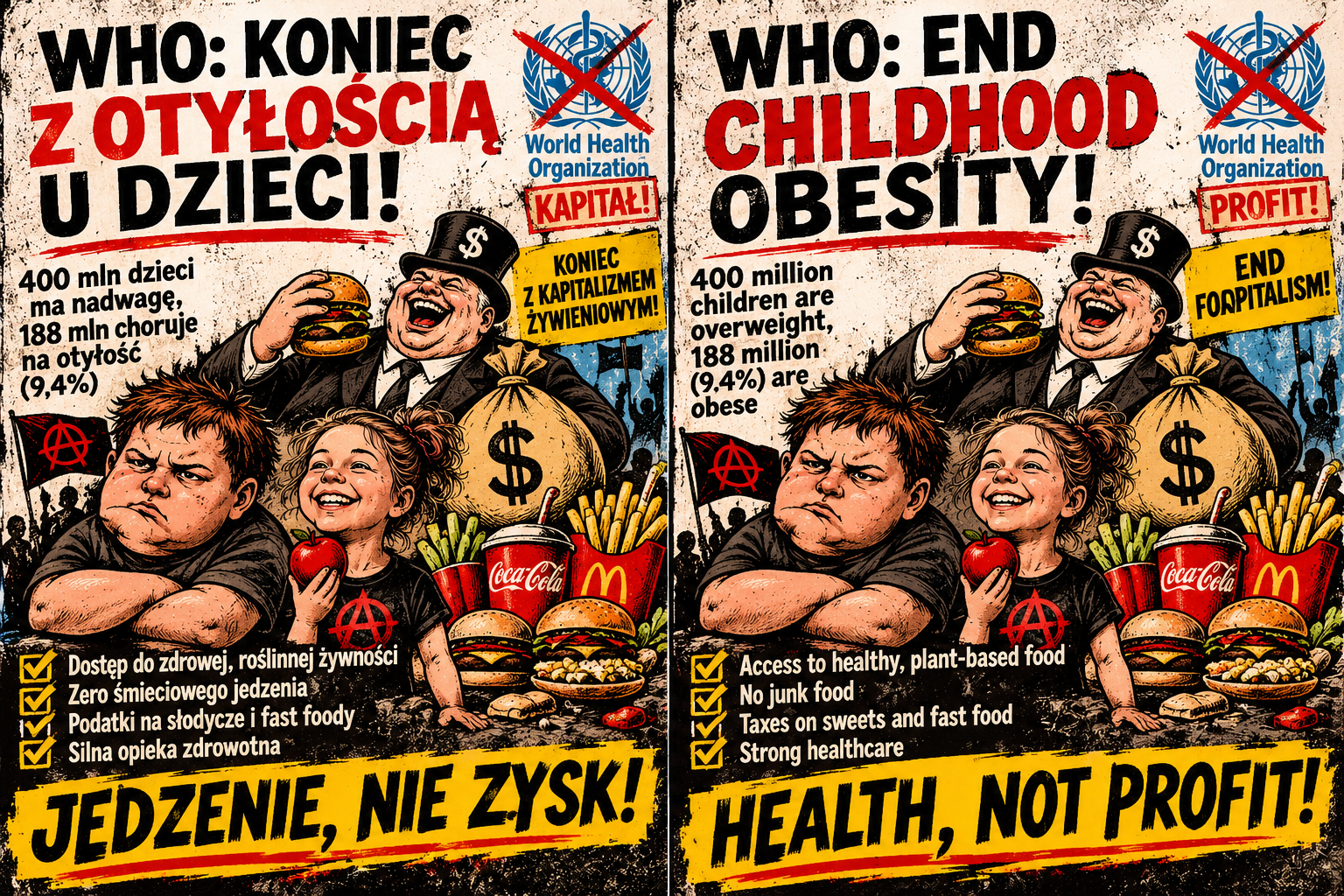
The World Health Organization (WHO) published the first global guidelines on obesity in children and adolescents at the beginning of October.
Around 400 million children in the world are overweight, that’s one in five aged 5-19, and according to UNICEF 188 million (9.4%) children in the world are living with obesity. That’s more than the underweight ones, who make up 9.2% worldwide.
We live in a zone where overweight and obesity are the problem, not hunger (although so-called hidden hunger is more common, meaning a lack of nutrients despite an apparent abundance of food, and it often goes together with overweight/obesity).
The guidelines are of course right and there’s nothing new in them, because they’re first and foremost recommendations for a balanced and varied diet, based mainly on fruit, vegetables and pulses, plus cutting down on fat, salt and sugar. So, what EBM dietetics keeps hammering into thick skulls, with, sadly, middling results.
Something else is especially valuable. The WHO recommendations on medical interventions refer straight to lifestyle medicine and EBM. And to systemic change.
“The foundation of obesity care for children and adolescents is not medicine or surgery, but access to comprehensive support that enables healthy eating, physical activity and sustainable behaviour change,” said Luz María De Regil, Director of WHO’s Department of Nutrition and Food Safety, summing it up for Nutrition Inside.
What matters is the recommendation that these interventions be as tailored and individualised as possible, taking individual physical and cultural circumstances into account, and including mental health support too.
WHO also points out that overweight and obesity often go with mental health problems like anxiety, depression, low self-esteem and emotional dysregulation. And that’s something I know from experience. In 2021 I weighed 96 kg. Because I was stuffing stress and depression down with sweets. And eating disorders have been with my depression since puberty at least.
And that’s the kind of approach the recommendations promote: holistic, systemic, demanding deep systemic change.
“Our priority must be to ensure that every child and adolescent has access to high-quality care and a supportive environment from the earliest years, helping them reach and maintain a healthy weight and laying the foundations for lifelong health and wellbeing.”
“Low-income communities face greater food insecurity and inequalities in health care, which underlines the need for access to nutrition resources and better nutrition education.”
The document calls for policies and measures that make a healthy diet and physical activity more accessible and affordable, using regulatory and fiscal tools for this purpose, and social policies too.
Because according to the guidelines, treating obesity in children and adolescents should go beyond weight loss and aim at better health, functioning and wellbeing. Care should be person-centred, suited to age and responsive to the needs of each child and family, with long-term follow-up and continuity.
And here it’s not even about what I always repeat on these occasions, because it’s always missing: chefs getting involved. Because however balanced and healthy a diet is, and not only for children and adolescents, it has to be tasty first of all. Otherwise you can print these noble guidelines. Roll them up. And shove them up your arse.
That would probably provide some interesting sensory experiences. Because a healthy diet made without chefs won’t provide any.
But that’s small fry next to the main problem.
Which is the use of fiscal tools and social policies. And not even so much the tools themselves as the hysterical reactions of the defenders of obesity, alcoholism, diabetes, heart disease and strokes. According to such people, effective action at the systemic and social level that cuts down these diseases means the collapse of the economy, the foundation of Polish culture is stuffing your fucking face with a greasy double-bacon burger, and the basic human right and freedom is getting shitfaced all night and screaming your head off drunk.
It’s also communism, occupation by bureaucrats (seriously, somebody wrote that and meant it), Kolyma, North Korea… well, I could go on.
But does society have the right to defend itself against psychopaths who want to destroy and kill it?
Nuremberg taught us it has a duty, even.
And who, if not a dangerous psychopath, is a man who goes: ha ha, I’ll make a fortune on people getting addicted, families falling apart, people dying early, and I’ll be counting my money! Or: ha ha ha, I’ll make a killing on this, and people will get diabetes and obesity en masse and die early, and I’ll be counting my money. Dr Mengele would be ashamed. The Nazis made “something out of nothing”, and today capitalism makes money out of every illness, misfortune and suffering.
It’s easier to imagine starving to death than the end of capitalism. So let’s not expect too much.
The WHO recommendations fit into something you could call social utopianism. And they’re not essentially different, or much more radical, than from the cradle to the grave of the post-war welfare state of the conservatives (sic!) and social democrats.
Let’s look at it practically.
Access to a healthy, balanced diet means getting rid of food deserts and food swamps. Which in Poland means nationalising the Żabka chain and merging it into Krajowa Grupa Spożywcza. In plenty of other countries, similar moves. In the USA, for example, against Walmart. And tied to significant pay rises, because in developed countries poverty is a risk factor for developing obesity.
Can you imagine a health minister announcing something like that? As part of a programme to fight obesity and alcoholism? And doing exactly the same to the fast-food chains.
Or at least slapping fucking huge taxes on them. And on one hand that hits the poor (as always), but on the other…
If fast food, booze, sweets made of shit, glucose-fructose syrup and flavouring identical to natural were insanely expensive, eating that stuff would become a symbol of high material and social status.
And the rich would get the diseases that come with obesity and so on. And the poor would eat healthy. And the rich would be decimated by diseases from a bad diet, and by diseases the health service can’t cope with, starved by the tax cuts they forced through themselves.
A specific form of social justice, all in all, that would be.
The kitchen is my space for lifestyle medicine.
I'm not a dietitian or a doctor – I'm a chef, and a member of the Polish Society of Lifestyle Medicine. Nutrition is essential to a modern kitchen, and that's nothing new: working from Hippocratic dietetic principles was part of a cook's craft centuries ago. At Rude Kitchen I tie that tradition to modern science — and to lifestyle. Read more about how I bring cooking and lifestyle medicine together on the About page.