
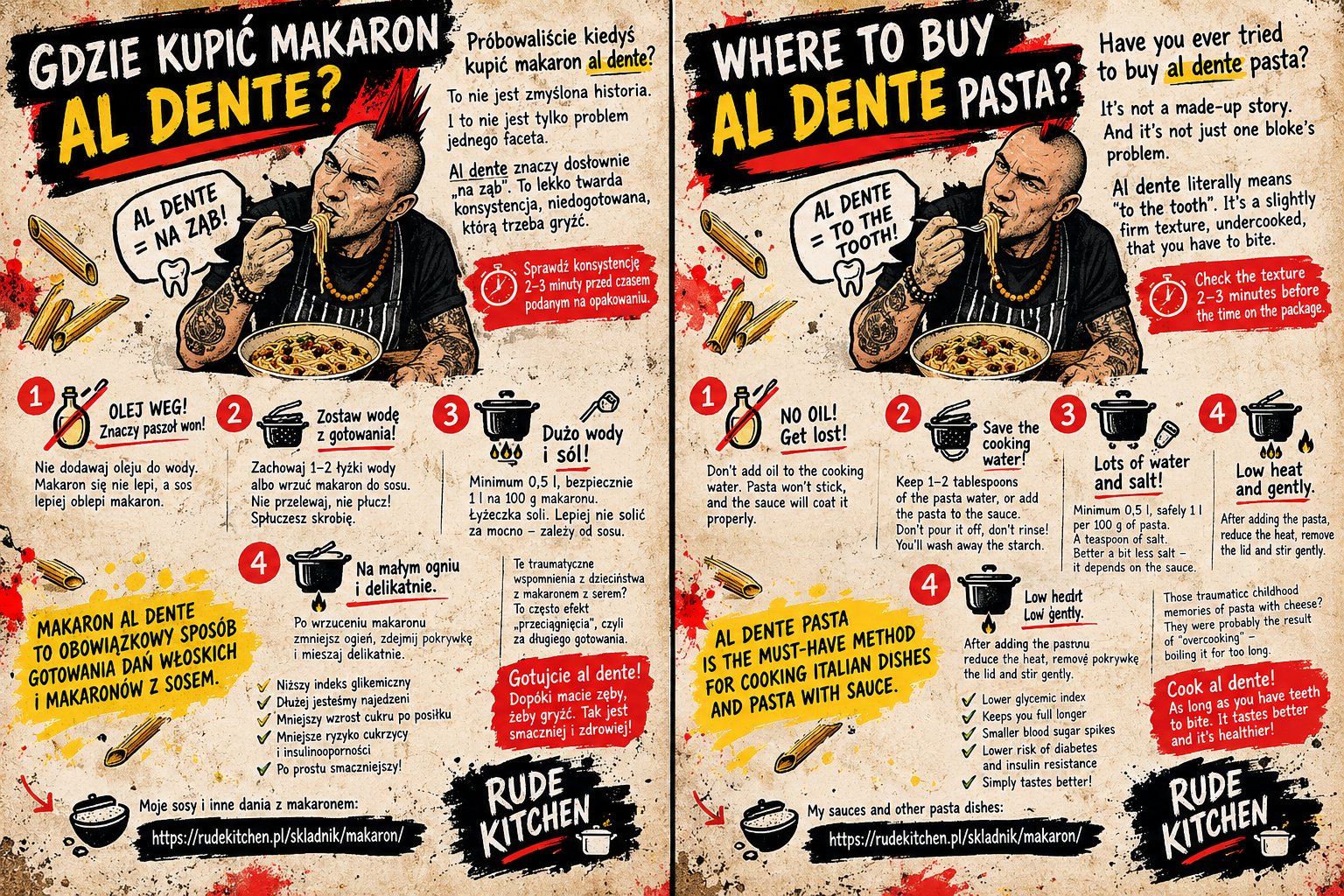
Where to buy al dente pasta?
Ever tried buying al dente pasta?
Me and a mate from catering had a right argument about whether that story about the bloke who wanted to buy al dente pasta was made up or true.
I reckoned it was true. Not everyone spends their life cooking and knows kitchen lingo.
It was about a story going round the internet about a guy who went looking in shops for al dente pasta. Because the recipe said to cook the pasta al dente. And he couldn’t find it anywhere.
Al dente literally means “to the tooth.” Why to the tooth? Maybe because it’s that slightly firm, undercooked texture, where you actually have to use your teeth to eat it.
To get pasta al dente, check the texture 2–3 minutes before the time stated on the packet.
Not every pasta is suited to this kind of cooking, either. Some, once cooked al dente, slowly turn into mushy pasta slop on the plate from their own residual heat. Gluten-free pastas especially have this tendency. Here I’d recommend (if you’re in Germany or heading there) the gluten-free pastas from Edeka, own-brand.
At the moment I use wholegrain pasta (in general I’d recommend wholegrain pastas, they’ve got a more interesting texture and they’re healthier) made from Alnatura spelt flour (they’re not paying me for the advert, though they should be, same as Edeka). Back in Poland I used to buy it, and even today I sometimes reach for Barilla. They do loads of interesting pasta shapes, like bucatini. Similar to spaghetti, but hollow in the middle. Recommended!
Al dente is the mandatory way to cook anything from Italian cuisine, and any pasta with sauce.
If you mix the pasta with the sauce, it’ll keep on cooking the whole time, so depending on how long you’re planning between prep and getting it on the plates, the pasta should be al dente to match.
Pasta cooked this way (like any other carb product, rice included) has a lower glycaemic index.
Meaning it’s digested slower, we stay full longer. We get a smaller blood sugar spike after the meal. And frequent big sugar spikes after eating are linked to a higher risk of type 2 diabetes and insulin resistance.
And above all, it tastes better.
I reckon those traumatic childhood memories, the school-canteen noodles with curd cheese, were exactly the result of it being “overdone,” that is, cooked too long.
Cook it al dente!
As long as you’ve got teeth to chew with. It’s tastier and healthier that way!
If you want to make pasta, whether it’s from my recipe (best option! see below) or from someone else’s, remember to cook it al dente, and also remember a few other important things to get it right.
1. Oil? Weg! As in: pashol von — bugger off!
Adding oil to the water you’re cooking pasta in supposedly stops the greasy pasta sticking together.
And it also stops the sauce coating the pasta properly, instead it just slides and slips off it. And the result is terrible instead of delicious.
Instead of adding oil, add the pasta slowly while stirring. And stir every now and then throughout the whole cooking time.
2. When you drain the pasta, keep back a tablespoon or two of the water it cooked in, or if you’ve already got your sauce ready and a dish to mix the pasta with the sauce in, chuck that not-quite-drained pasta straight into that dish. And God forbid you pour it through and rinse the pasta, because you’ll rinse the starch off it and get the same result as above.
That water contains starch, which will thicken the sauce and make it stickier, so it coats the pasta more thoroughly.
3. Plenty of water, a litre per 100g of pasta, and a teaspoon of salt. Actually it’s better to undersalt the pasta a bit, but it depends on the sauce. If you’ve got a strong, intense, especially salty sauce, the pasta can even afford to be a bit bland.
4. Low heat, and gently. Once the water comes back to the boil after you’ve put the pasta in, turn the heat down, take the lid off (pasta has a tendency to boil over), and stir it gently, especially after a few minutes of cooking.
My sauces and other pasta dishes
https://rudekitchen.site/?s=Pasta
The kitchen is my space for lifestyle medicine.
I'm not a dietitian or a doctor – I'm a chef, and a member of the Polish Society of Lifestyle Medicine. Nutrition is essential to a modern kitchen, and that's nothing new: working from Hippocratic dietetic principles was part of a cook's craft centuries ago. At Rude Kitchen I tie that tradition to modern science — and to lifestyle. Read more about how I bring cooking and lifestyle medicine together on the About page.