What’s the worst thing about vacations? Especially when you live alone. In the middle of the forest.
The contents of the fridge when you get back.
It’s a good idea to get rid of everything in the fridge before you leave, so you don’t get greeted by a newly evolved civilization when you return.
And when you come back, there’s almost nothing to eat at home.
But you’ll usually find a can of legumes, some canned tomatoes or tomato paste — and that’s already enough to cook something good.
INGREDIENTS:
- 2 large bell paprika
- 1 can of chickpeas (or cooked equivalent)
- 1 tbsp agave syrup (or another syrup, or in a pinch: sugar)
- 1 tbsp Worcestershire sauce
- 50 g tomato paste
- 200 ml oat cream
- optional: one chili pepper
PREPARATION:
Cut the peppers in half and remove the seeds and white membrane. Roast at 200°C for about 20–30 minutes until well charred.
Let them cool and peel off the burnt skin.
Drain the chickpeas very well, mix with a teaspoon of agave syrup. Spread them on a baking sheet and roast at 200°C until browned — about 20 minutes.
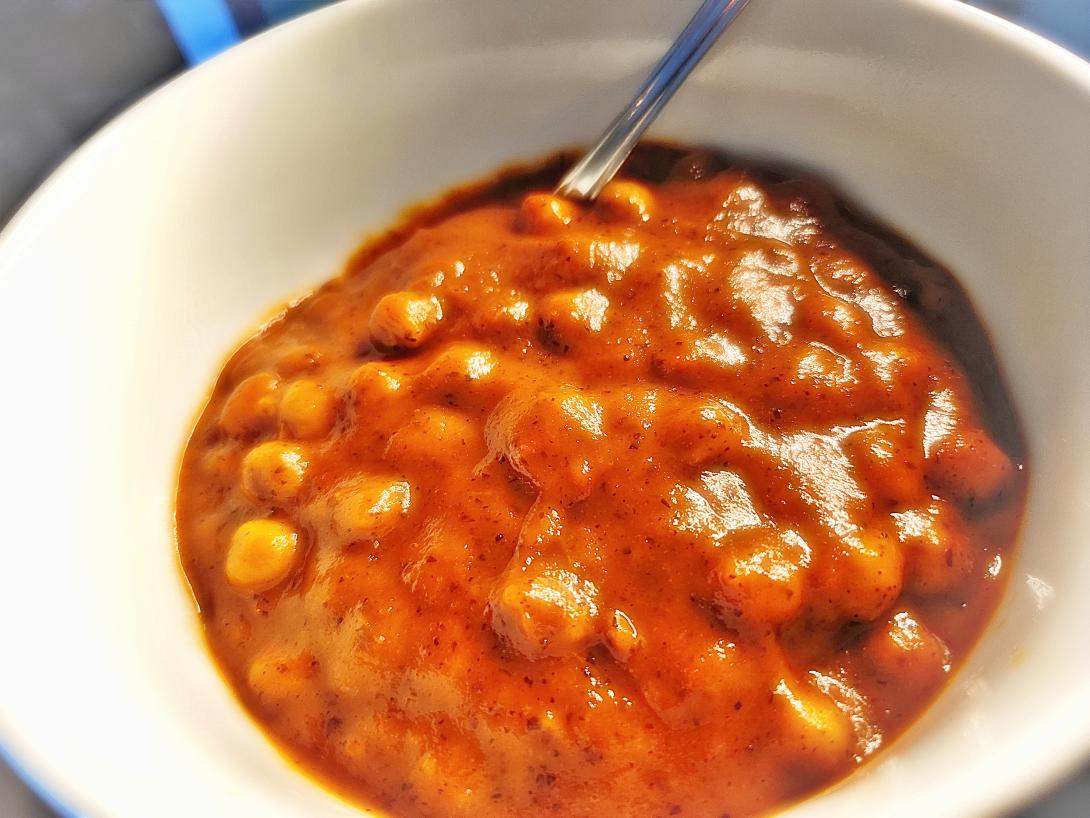
Blend the peppers with the tomato paste, Worcestershire sauce, just under a tablespoon of agave syrup, and the oat cream.
Add the roasted chickpeas, salt, and bring to a gentle boil over low heat.
VARIATIONS:
Another dish from the “whatever you find” series.
It was created from what I found in the fridge and pantry after returning from vacation.
Feel free to experiment with it: use beans instead of chickpeas, try replacing the cream with broth, fruit juice, passata, or a combination. The sky is the limit.
Instead of Worcestershire sauce, you can use soy sauce.
NOTES:
It’s essential to drain the chickpeas thoroughly — if you don’t, they’ll take a long time to bake because the liquid needs to evaporate first.
SERVING:
Serve in bowls with bread.
NUTRITIONAL VALUES:
Per 100 g, it contains only approximately.:
73 kcal, 2.5 g protein, 2.5 g fat, 10 g carbohydrates
Canned legumes, tomato paste, or passata are essential pantry staples — always useful for situations like this.
Add some vegetables — onion, peppers, carrots — whatever you like and have on hand, and you’ve already assembled a full meal.
With bread, pasta, rice — whichever starchy side you prefer.
A bit of soy sauce or Worcestershire for umami.
Oil or olive oil as a flavor carrier.
And you can put dinner together in no time.
In the industry, the best form of respect and motivation is a tip.
So if you like reading what I write, feel free to tip me too
The kitchen is my space for lifestyle medicine.
I'm not a dietitian or a doctor – I'm a chef, and a member of the Polish Society of Lifestyle Medicine. Nutrition is essential to a modern kitchen, and that's nothing new: working from Hippocratic dietetic principles was part of a cook's craft centuries ago. At Rude Kitchen I tie that tradition to modern science — and to lifestyle. Read more about how I bring cooking and lifestyle medicine together on the About page.