
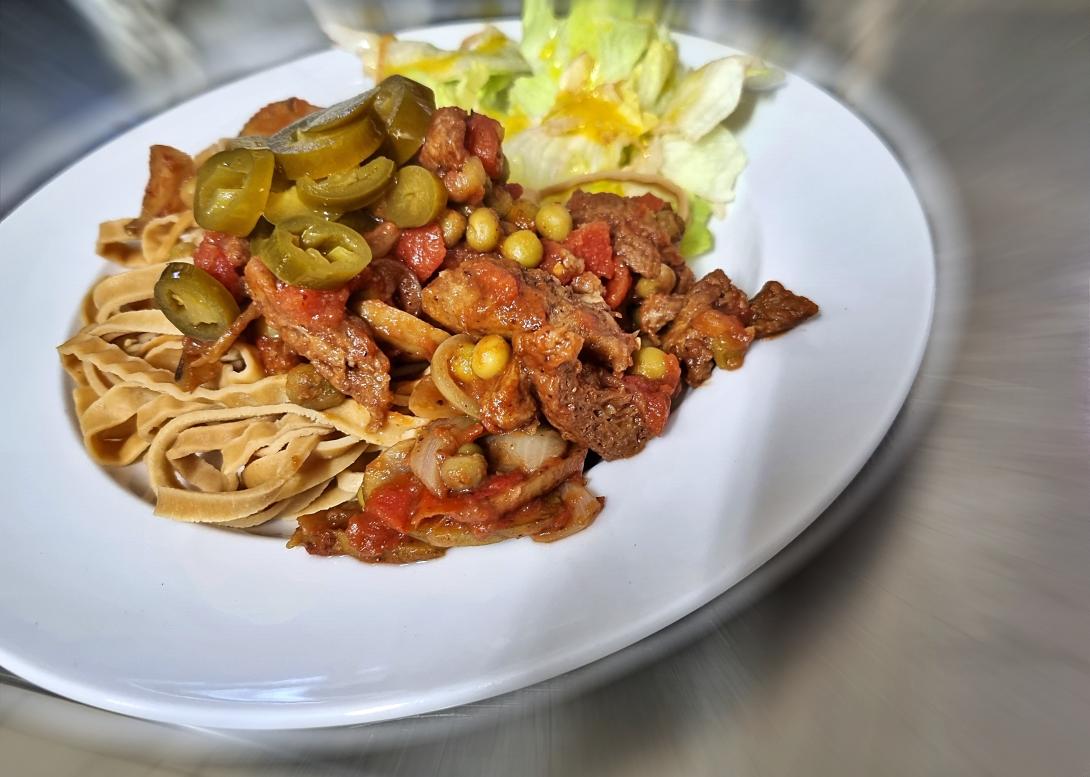
Textured soy protein (TSP), also known as soya meat (doesn’t it sound better?), is probably the oldest strictly vegan/vegetarian product produced in the West. Today, it is underrated, somewhat forgotten, old-fashioned, or unfashionable, despite being very interesting and fitting in with current culinary trends such as zero waste, because it is made from waste. TSP is obtained from waste soybean oil cake, using a process called extrusion, which involves subjecting it to high temperature and pressure simultaneously.
The production process is quite simple and does not require complicated technological or chemical processes. The soybean cake is subjected to high pressure and a temperature of 150-200°C during extrusion through nozzles. When it emerges from the nozzles, the product rapidly expands and cools, taking on a characteristic spongy form, and is then dried.
The production method was developed in the 1960s by the Archer-Daniels-Midland food corporation in Chicago. The company also owns the name “Texture vegetable protein” and the abbreviation TVP as a registered trademark.
Good TSP products consist mainly, if not entirely, of protein and fiber. So, the composition is not perfect, but very good. What is important and characteristic is that the product is completely neutral in taste and can be directed in different directions. In my kitchen, there is a basic division if I reach for a recipe traditionally made with meat and want to replace it with white meat – tofu, red – soya meat.
What is important and unfortunately often a problem is the texture. Many varieties of soy cutlets have the unpleasant property that they become too soft very quickly during cooking or heat treatment and do not have the hardness or elasticity characteristic of meat. Since I have been in Germany, I have been using Vantastic Food, which has a phenomenal density. In Poland, I used to buy similar products from the Czech company ProVita. There were also very good soy cutlets under the Carrefour brand, but they disappeared at the end of 2018.
TSP is produced in various forms for different uses: cutlets/medallions, big steaks, soy pieces, and soy granules. Soy granules can replace minced meat after soaking but need the addition of wheat and/or potato flour to bind properly. Textured soy protein also serves as a filler, reducing the cost, for example, in meat sausages and similar products.
Preparation: the marinade in which we cook and marinate TSP is essential. The basic and simplest version is water with soy sauce and/or broth. Soy sauce is significant here because it adds umami taste, making soya meat more “meaty”.
How much protein do soy-meat dishes actually deliver? I counted it across the blog: high-protein recipes, protein per serving.
Did you like this text? Do you want more similar ones? Support my blog
The kitchen is my space for lifestyle medicine.
I'm not a dietitian or a doctor – I'm a chef, and a member of the Polish Society of Lifestyle Medicine. Nutrition is essential to a modern kitchen, and that's nothing new: working from Hippocratic dietetic principles was part of a cook's craft centuries ago. At Rude Kitchen I tie that tradition to modern science — and to lifestyle. Read more about how I bring cooking and lifestyle medicine together on the About page.