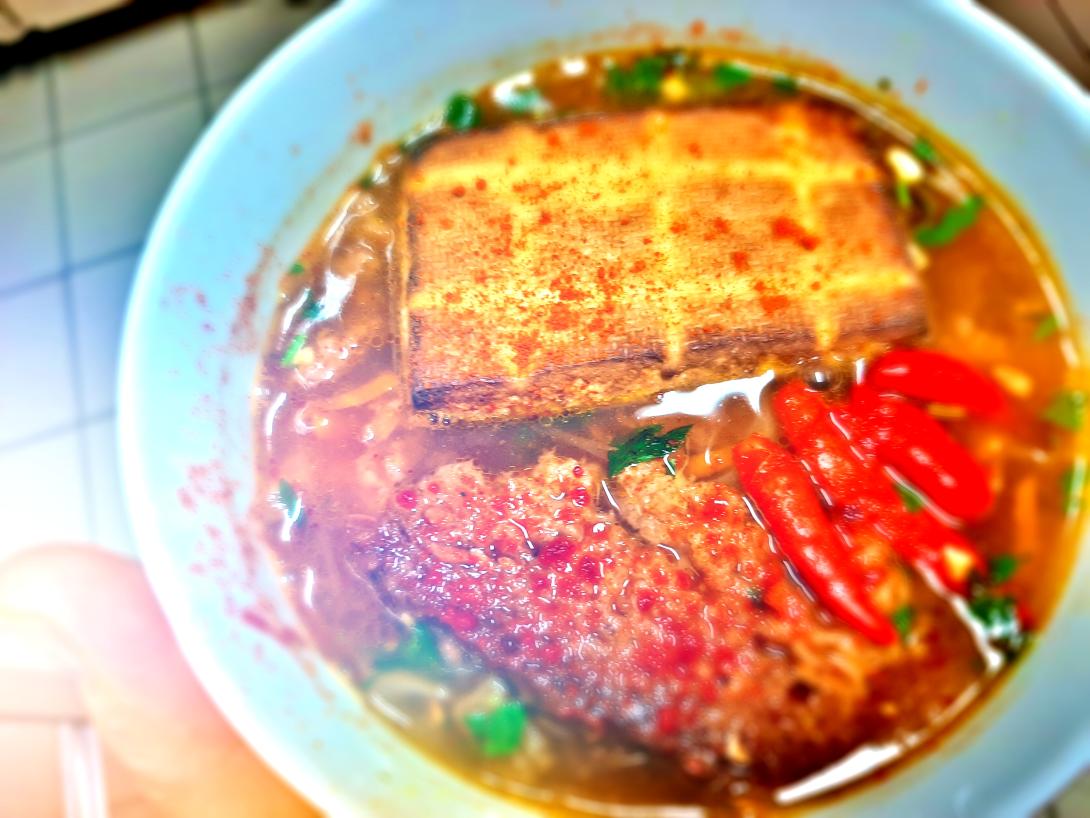
I reached for one of the cookbooks on my shelf, looking for inspiration, and after a few minutes, I stumbled upon an onion soup recipe. This reminded me of the first soup I ever made as a teenager — onion soup with chunks of bread and grated cheese.
Onion soup is a typical “poor man’s” dish across almost all of Europe, just like soups thickened with bread, which were popular until the early 20th century. Onions, first wild and later cultivated, were easily accessible and inexpensive, while bread was the staple food for the poor. When bread became too old and hard to eat, it was never thrown away — not because it was treated with some almost religious reverence (though I still remember from my childhood in the 1970s being taught by my parents to pick up and kiss a fallen piece of bread) — but simply because there was never enough food. Old bread, for example, was often used in soup.
Today, onion and bread soup is a great way to use leftover stale bread.
Ingredients:
– 4 slices (approx. 180 g) of bread (see notes)
– 500 g onions (about 6 large onions), half red and half white (see variations)
– 50 g linseed oil and oil from sun-dried tomatoes, half and half (see variations)
– 1 tsp ground garlic
– Ground bay leaf and allspice, ½ tsp
– ⅓ tsp cinnamon
– ⅓ tsp ground nutmeg
– 2 × 200 g blocks of smoked tofu
– 2 liters of broth
– A large handful of parsley
– 2 tbsp lime/lemon juice
Instructions:
1. Bake the bread slices in an oven at around 200°C until they dry out completely and begin to brown.
2. Slice the tofu into three large pieces lengthwise and bake at 190–200°C/460-475°K until golden.
3. Cut the onions into thin strips and stew them under a lid on low heat for 10–15 minutes until they are thoroughly browned and begin to turn golden.
— This slow cooking brings out the sweetness of the onions. Toward the end, add the spices and fry for a few minutes, stirring to release their maximum flavor.
4. Add the broth and whole slices of bread. Increase the heat and bring the soup to a gentle boil. It should just lightly bubble, not boil aggressively! Do not stir.
5. Finally, add the parsley, lime juice, season with salt, and gently mix. The goal is to ensure that the bread doesn’t fully disintegrate but breaks down into large chunks. Let it sit for a few minutes, literally 2–3, to allow the parsley to blanch.
Variations:
– You can use only red or only white onions instead of a mix.
– I used linseed oil and oil from sun-dried tomatoes because that’s what I had, but of course, you can use other oils, like regular canola oil. Oils were the primary form of fat in traditional folk cuisine.
– To give the soup a heavier, smoky flavor, you can also season it with smoked salt or smoked paprika.
Notes:
– Tosted bread or “puffed” bread isn’t suitable for this soup; the best option is whole grain or wheat-rye bread, even with seeds (which is what I used because it’s what I had).
– I used smoked tofu from Food For Future, a vegan brand by Penny Germany. It’s smoked but soft. I don’t recommend the very firm smoked tofu that’s often available in stores. Classic tofu or various flavored tofu also works well in this recipe.
Serving:
Serve with pieces of baked tofu.
This is exactly what folk cuisine is all about — using ingredients that are available, affordable, and seasonal or just whatever happens to be on hand. Onions, vegetables, legumes, and from the 19th century onwards, potatoes and flour-based products were common. Here, I used half linseed oil and half oil from sun-dried tomatoes simply because that’s what I had on hand. This ties into Polish folk traditions, where linseed oil was a basic ingredient, and into Italian cuisine, where sun-dried tomatoes have been considered “the meat of the poor” for centuries.
Onions and bread, in turn, are universal ingredients and basic foods for the poor across Europe. The most famous French onion soup, with the addition of grated cheese, made its way from the tables of the poor to royal courts in the 18th century. It came from Italy, where Catherine de’ Medici, the great-granddaughter of Lorenzo the Magnificent, brought the recipe to France in 1533 when she left Italy to marry King Henry II of France. There’s really nothing stopping you from following the spirit of Italian “cucina povera” and adding tomatoes to this soup.
Fresh herbs have also long been used to brighten up what was often bland food for the poor. Here, I used parsley, but cilantro or even a bit of mint can further enhance the soup’s flavor. Similarly, herbs like thyme or savory also work well.
There’s no going back to the kind of folk cuisine from centuries ago, or even a hundred years ago. The people themselves would resist it — with their hands, feet, and ballots. No one in their right mind would want to live or cook like it was a hundred years ago, without frozen food, canned goods, multicookers, or electricity to grind, mash, and blend things.
Take manna grass (“Glyceria fluitans”), for example. It used to be a common food for peasants in Poland and many other regions of Europe. However, it’s not suitable for cultivation, the seeds are small, and the harvest is low. As food shortages eased and labor became increasingly necessary (and thus more expensive), it became cheaper or more practical to start buying food than to collect manna grass.
Today, it could return as a middle-class fashion trend or a hipster indulgence, and due to the method of harvesting, it would likely cost more than… well, a lot. It would certainly cost a lot, and it would be sold as the food of our peasant ancestors during the next wave of popularity for folk culture and roots. But would it have anything to do with real folk cuisine?
Did you like this text? Do you want more similar ones? Support my blog
The kitchen is my space for lifestyle medicine.
I'm not a dietitian or a doctor – I'm a chef, and a member of the Polish Society of Lifestyle Medicine. Nutrition is essential to a modern kitchen, and that's nothing new: working from Hippocratic dietetic principles was part of a cook's craft centuries ago. At Rude Kitchen I tie that tradition to modern science — and to lifestyle. Read more about how I bring cooking and lifestyle medicine together on the About page.