Actually, it’s not hummus. But it’s an example of how dishes change and evolve. Hummus is probably something that everyone knows today. I suspect that if studies were done, hummus would definitely be one of those dishes that, as a result of globalization, spread from its culinary refuge to the whole world. And it’s something whose significance and importance we don’t fully understand yet.
We have never had such a wide variety of not only products but also dishes available. This is important not only in terms of cuisine (more flavor choices on the plate) but also socially (many exotic, previously exclusive products become widely available, new products from around the world emerge) and health-wise (a more varied diet usually translates into better health). But there are also very negative social or ecological consequences that I mentioned in relation to avocado and quinoa.
We also have our own cultural shocks in the kitchen, multi-culti, and “culinary Marxism,” of which Karol Okrasa is a prominent representative in Poland, but also figures like Robert Mak³owicz (who emphasizes his anti-socialism) refer to this powerful trend. Because, in reality, this is the essence of the kitchen. The kitchen is not a museum where frozen exhibits last unchanged for centuries, like in the museum in Wolfsburg (which I recommend – an excellent museum of everyday life) where we can visit a household from 50 or 100 years ago. Anyone who would want to have a kitchen equipped like that today, without electric or gas stoves, without blenders, mixers, and fear, would be considered an idiot.
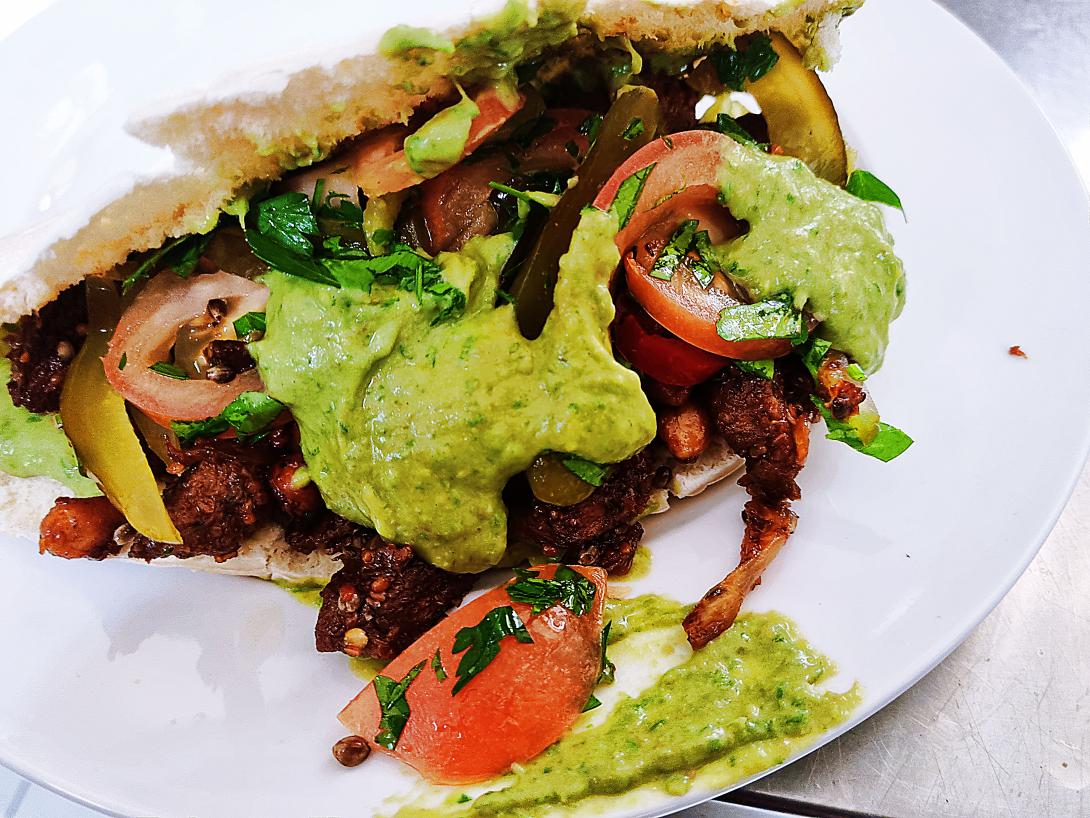
And is it still hummus? Hummus was an inspiration for this recipe. Hummus in the version from some German magazine “Cheap Vegetarianism” or something like that, given out in Bioladen, a health food store, with the addition of yogurt, and the products I currently use in large quantities – red beans and wild garlic.
INGREDIENTS:
400g kidney beans or similar (see NOTES)
30g avocado oil
75g lupine yogurt (or other)
50ml water
85g wild garlic
20g lime juice
PREPARATION:
If using canned beans, skip to step 2. If using dried beans, cook them according to this recipe
In a blender, combine the cooked beans, avocado oil, yogurt, and wild garlic. Blend until smooth. Add water (or more yogurt) to achieve a thinner consistency. Season with salt, lime juice, and additional wild garlic, if desired. Blend until smooth.
For best results, use a multicooker, but a hand blender or food processor can also work.
VARIATIONS:
You can use olive oil or any other good quality oil, but avoid strongly flavored oils such as peanut or sesame oil. The oil is mainly used as a carrier for the wild garlic flavor, not for its own flavor.
NOTES:
I recently had a lot of beans on hand, which inspired me to create this dish. However, I don’t recommend soaking and cooking large amounts of beans unless you enjoy eating the same thing for several days. You can also use the cooked beans in other dishes, such as burritos, soup, salads, bowls, pasta, or hummus.
If you do cook a large amount of beans, you can portion them into bags and freeze them. Label the bags with the date and contents and use the “first in, first out” rule when thawing.
Use the wild garlic leaves and stems, as they have a lot of flavor.
The proportions in the recipe make a large batch, so you may want to start with half and adjust to your taste.
SERVING SUGGESTIONS:
Serve with pita bread, croutons, on sandwiches, with falafel, or fries. It’s perfect for a vegetarian kebab. I like to serve this type of dish as part of a mezze platter with plenty of fresh and pickled vegetables.
The economic conditions, availability of products and kitchen tools, and cooking techniques (which result from changes and technological development) are constantly influencing the way we cook. This process is not new, nor is it a postmodernism or “liquid” cuisine (to borrow Bauman’s term). Rather, it is at the heart of cooking and culinary arts.
Currently, this process has accelerated and, above all, become more visible. 100 years ago, when someone created a new recipe, only those who were fed by them knew about it, and maybe a few others who read about it (a much smaller group than today). Today, “Okrasa breaks the rules” on TV screens and the internet, entering the kitchens of millions of people and showing such modernization of classic Polish dishes as adding orange juice (which I learned from him and now use reduced orange juice as a perfect spice/sauce – highly recommended). This is not a new phenomenon in Polish cuisine. In the old Polish cuisine (the high cuisine), ingredients such as citrus and figs were commonly used.
Every recipe is a photograph, a static image of a dynamic process. The kitchen is dynamic, it is a process. A recipe is more like a musical score for interpretation than a description of a chemical process for producing methamphetamine (well, I just watched Breaking Bad), which must be strictly followed.
Just as bigos is a symbol of Polish culinary tradition, it is an example of how cuisine is constantly changing. Bigos today is a completely different dish than what the magnates enjoyed centuries ago when it was based on chopped, “bigos-ed,” roasted meat, stewed sourly, often with citrus juice added.
Everything is constantly changing, as Buddha teaches. I am a verb, Buckminster Fuller said, referring to both the cook, who only exists through action, and to what we call a recipe, dish, or meal. Just as a reflection is not the moon and a map is not the territory, we never reproduce a recipe perfectly one-to-one. For example, we may use more or less fresh spice, or the carrots may have more or less water content. Moreover, even if the description appears in the recipe, we do not know the original taste of the dish. Cooking is not about reproducing recipes; it is about achieving the best possible result with the least cost and constant work on taste. The kitchen is change.
Did you like this text? Do you want more similar ones? Support my blog
The kitchen is my space for lifestyle medicine.
I'm not a dietitian or a doctor – I'm a chef, and a member of the Polish Society of Lifestyle Medicine. Nutrition is essential to a modern kitchen, and that's nothing new: working from Hippocratic dietetic principles was part of a cook's craft centuries ago. At Rude Kitchen I tie that tradition to modern science — and to lifestyle. Read more about how I bring cooking and lifestyle medicine together on the About page.