"I won't eat without meat," "Vegetarian cuisine is tasteless." I've heard it hundreds of times, and nothing is surprising about it because it often is. I've written about it many times. A common mistake is somewhat removing meat from a dish and assuming that's enough. No. Meat must be replaced with an ingredient that provides both protein and umami flavor.
Umami, Maillard reactions. These are serious and extensive topics. To put it briefly, umami is the "delicious, full, fatty" taste found in meat, and the challenge is to bring it out in vegetables. However, mushrooms, dried tomatoes, pickles, and fermented products like soy sauce contain umami.
Maillard reactions occur at elevated temperatures in the presence of proteins and carbohydrates. We owe these reactions to the crispy crust on bread and cutlet and the beautiful aroma of baking.
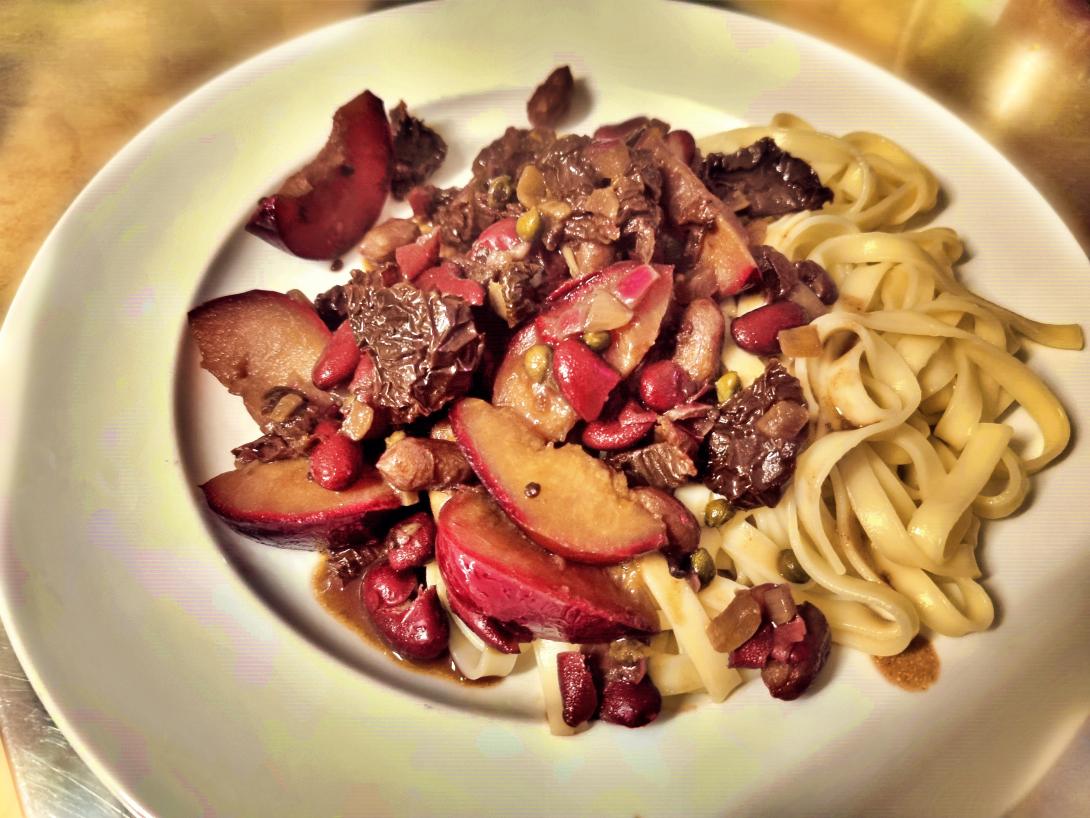
Kidney bean with dried tomatoes is a dish full of umami, intense, and aromatic. It's easy and quick to prepare, where cooked protein and simple sugars together add a lot of intense "roast" aroma.
INGREDIENTS:
- Sun-dried tomato oil 30g
- Onion 200g (2 pieces)
- Peanuts 100g
- Red Kidney beans in a can 1 can (or an equivalent amount of cooked red beans)
- Soy sauce 30g (3 tablespoons)
- Dried tomatoes 100g
- Capers 30g (small jar), optional
- Plums 200g
PREPARATION:
1. Dice the onions.
2. Cut the dried tomatoes into strips.
3. Quarter the plums.
4. In a pot, heat the sun-dried tomato oil, add the onions, and when they start to turn golden, add the peanuts and fry for a few more minutes.
5. Add the beans with the brine and bring to a boil. Simmer for a few minutes, adding dried tomatoes during the process, and finally, add plums and capers.
6. The plums should only slightly soften. Mix and remove from heat.
VARIATIONS:
The essence of this dish is a lot of umami, with soy sauce and dried tomatoes adding a ton. Dried mushrooms will also work well.
Peanuts add protein, but you can use other nuts or almonds. Tofu or seitan will work too. You can prepare the sauce separately and serve it with a slice of tofu, fried in, for example, sesame oil.
Plums can be used dried or even smoked. Other fresh or dried fruits can be used; it's highly seasonal. Apples, once the basis of bigos, are currently an underrated fruit in Polish cuisine. The fruits used must be sweet, as their sweetness strongly influences the final result.
You can season the dish generously with caraway or cumin if you're concerned about the gastric effects of beans.
If you have them, use fresh herbs like thyme, savory, parsley, either added during cooking or sprinkled when serving.
I didn't use any spices because the dish itself contains so much umami that it has an intense flavor, but that doesn't mean you shouldn't modify it.
NOTES:
You can use both red and white onions. I used half and half.
Peanuts can be used with the shells.
SERVING:
It goes well with everything: pasta, potatoes, rice, grains, or bread. It's worth serving it with some seasonal vegetables, whether fresh or pickled.
NUTRITIONAL VALUES, COST:
The quantities given in the recipe are divided into 4 portions.
In one portion, with udon noodles (75g of dry noodles, 1/4 package per portion), the dish contains 630 kcal and 25g of protein.
Without noodles, just the sauce per portion is
360 kcal, 16g of protein.
Many of the ingredients in this dish are products that can be stored for a long time, whether it's canned or dry beans, dried tomatoes, peanuts, or capers. It's worth buying such products on sale, even if you don't use them immediately. Often, both online and in brick-and-mortar stores, you can buy bulk packages, from a few to a dozen pieces.
Pay attention to this when shopping and plan it for the longer term. What to eat daily, weekly, monthly, and every six months. Products like canned goods, preserves, frozen foods, coconut milk, oils, kinds of vinegar, pasta, nuts (but be particularly careful to check the expiration date on nuts), rice, grains, legumes, and flours are products worth buying on a six-month basis. You can buy these products in larger quantities on sale, which limits us in terms of kitchen cabinet space and wallet capacity, as this means a one-time higher expense.
When planning your shopping, start with products on sale, even those with a short shelf life. If zucchini or peppers are on sale, plan a ratatouille. Dried tomatoes - the next day, this bean dish. Green peas - some salad, paired with some fruits that are cheap and pretty - apples, pineapples. Go towards Asian or Polish cuisine, depending on what you have in your pantry and fridge, and what's on sale at the store.
Did you like this text? Do you want more similar ones? Support my blog
- Zaloguj lub zarejestruj się aby dodawać komentarze