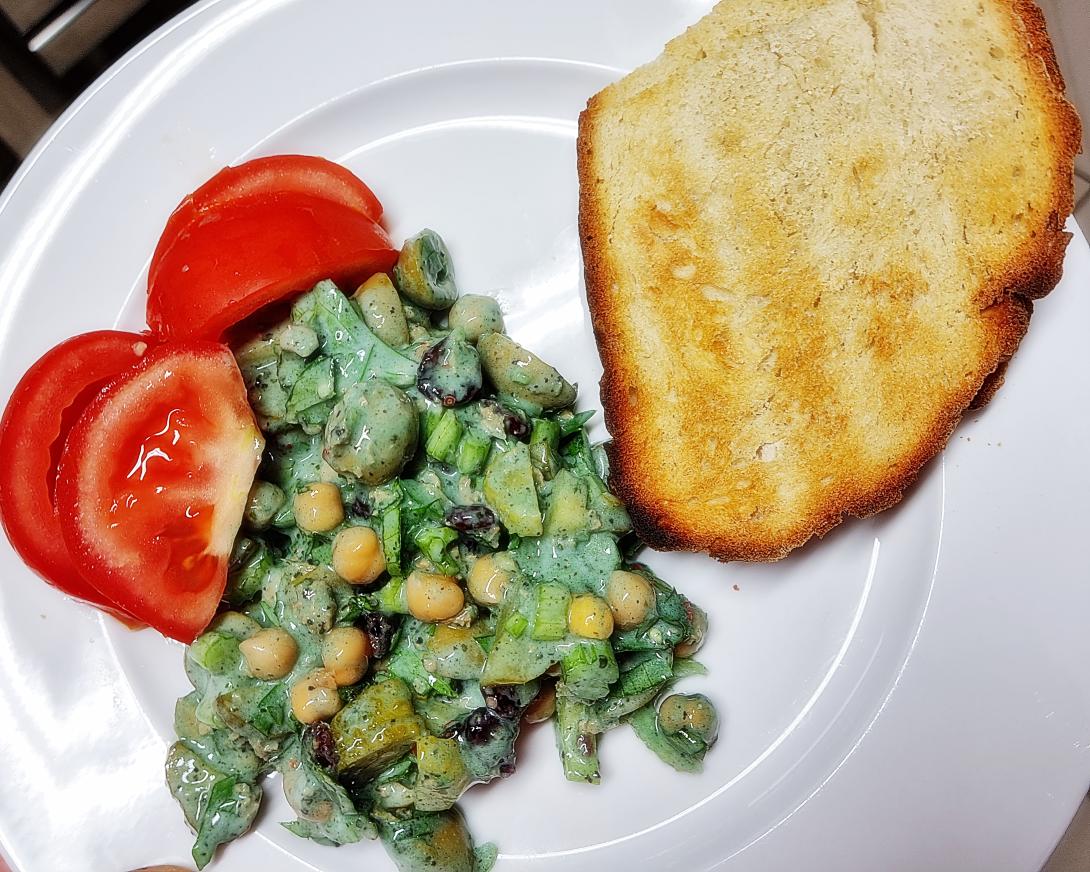
In the plant-based kitchen, we often try to "imitate" meat dishes. Sometimes, it's because we miss those flavors, and sometimes, it's for the professional satisfaction of achieving a good culinary illusion. I especially like it when such a dish passes the "carnivore test." Someone claims that there must be meat in there. But it doesn't have to be. It just has to have flavor. It needs umami and a few more flavor-nutrient elements. And it doesn't have to imitate the flavors and textures of meat or fish dishes, but rather create something new.
This dish or dishes, primarily based on a mixture, are exactly elements of such an approach. Creating a flavor that's reminiscent of the sea. An additional interesting effect is the color. Depending on the variety, spirulina can color various shades from green to blue. I became fascinated with this some time ago when I had a blue spirulina smoothie in Hamburg. And that green-blue color is also associated with the sea, right?
Sea Mix:
5 grams of bladderwrack
1 sheet of nori seaweed
5 grams of wakame
10 grams of spirulina
Grind them together in a mill as finely as possible.
Basic Salad Version:
1 can of chickpeas (or the same amount of cooked chickpeas)
1 tablespoon of flaxseed oil
1 teaspoon of sea mix
1 teaspoon of lime or lemon juice
fine-grain salt (preferably)
Mix thoroughly, optionally adjust with lime, salt, oil, and the sea mix.
This is the simplest version of the sea salad. You can add things like apples and leeks to it. You can also mash the chickpeas with a fork or a potato masher and serve them on a sandwich or toast. Top with finely chopped onion, for example.
I'm still using various products left after guests visited. I had about 1.5 loaves of bread left, and for a few days, I mostly ate toasts. I had leftover celery. I also found a forgotten can of vegan tuna in my personal stash. These products appeared somewhat recently, and I was pleased because I used to like canned tuna. Although, generally, after a period of indulgence, when I came to Germany in 2019, I rarely buy such products, unless it's to try something new or for convenience, like vegan sausages or tortellini. I also like canned vegan tuna.
For this salad, the vegan tuna was a starting point, but I thought there was too little of it and I wanted to make something that would last for a few days. As a result, in my opinion, you can remove the "tunvish" from the final recipe, which is probably the most expensive ingredient here, which is particularly important now.
INGREDIENTS:
chickpeas with spices from the basic recipe
1 can of vegan tuna (140 g), optional
3 stalks of celery (120 g)
50 g dried cranberries
100 g pickled cucumbers
100 g pitted green olives
150 g mayonnaise from this recipe
100 g lupine yogurt (or other)
1 teaspoon (5 grams) of the sea mix
lemon juice
PREPARATION:
To the prepared chickpeas, add vegan tuna (optional) and chopped celery, along with its leaves, cranberries, and thinly sliced cucumber.
Cut the olives in half (approximately), and add mayonnaise, yogurt, season with lemon juice and the sea mix.
Most people peel celery. In my opinion, it's not necessary. If you're cooking the celery, there's no need, and if you're using it raw, as in this recipe, the slightly crispy skin will enhance the dish's texture.
For such a salad, it's good to add something sweet. Here, I used cranberries, of which I have an open large package. Reach for products that are older first, with a shorter expiration date, from a package that's already opened. This is also a way to reduce food waste.
However, instead of cranberries, you can confidently use raisins, pineapple, apples, or pears.
The sour element is pickled cucumbers. Germans, who have a great love for sauerkraut, are not familiar with pickled (or lightly salted) cucumbers at all, so they use preserved ones. Here, I cut the cucumber into half slices, similar to the shape of the celery stalks.
VARAIATIONS:
As mentioned above, the salad was born out of the need to use leftovers and the desire to play with flavors. You can treat it as a template and change the ingredients, using different pickled or preserved vegetables, various sweet elements, and basically working with what you need to use. Salads and soups are the best dishes for using up leftovers.
For this salad, capers would also be a great addition, both for flavor and due to their iron content. Parsley, especially for its taste and iron content, would be a valuable addition as well.
NOTES:
In the salad, I used both mayonnaise and yogurt. I try to limit mayonnaise due to its caloric content, but not every yogurt will work well here, so you'll need to test it yourself. I use lupine yogurt, iits only on Germany. The yogurt should have a distinct tangy taste and a thick consistency. Also, remember that there are different types of spirulina, and the color of the salad will differ accordingly.
SERVING:
You can serve it with cocktail tomatoes, which will complement the color nicely, or with toast.
NUTRITIONAL VALUES:
The recipe yields 4 servings of about 250 g each.
Each serving contains about:
- 40 kcal
- 10.5 g protein
- 27 g fat (from the mayonnaise)
- 27 g carbohydrates
As I think about it now, I'm disappointed by the lack of such proposals, such flavors, either in vegan restaurants or at the vegan Christmas market in Hamburg. On the other hand, there's also a lack of offering such a regional menu to a wider market. You know, Hamburg, the North Sea, fish is a traditional cuisine here, for both the wealthy and the poor.
But I also haven't come across vegan regional dishes, like plant-based versions of traditional warm dishes, such as the meat-based Eintopf, which is one of the main items at the local Weinachtsmarkt. In this regard, Polish or at least Warsaw restaurants and vegan events are more interesting. Recently, when I was going to Hamburg and looking for a vegan restaurant, I thought, "Oh no, Asian food again." Hamburg has many vegan Asian restaurants and almost nothing else. Yet, I would love to have vegan or plant-based versions of traditional regional dishes. Something similar to what I thought about in Warsaw – a local place with plant-based cuisine, street food, and casual dishes from various continents. For Germany, Currywurst and Kartoffelsalat would probably represent that.
I'm trying to create that kind of cuisine. In the conditions I have, it's generally on the level of a good cafeteria, something casual and sometimes street food-like, such as when I served flatbreads with guacamole. Would you try that?
Did you like this text? Do you want more similar ones? Support my blog
- Zaloguj lub zarejestruj się aby dodawać komentarze