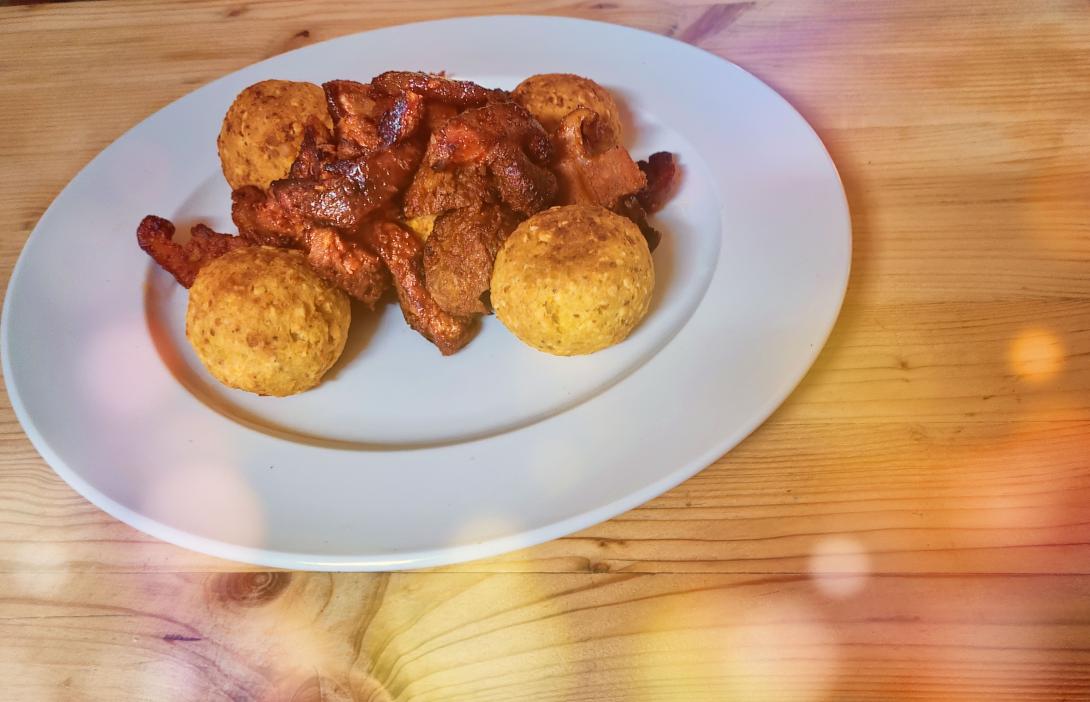
In the kitchen, we are all dwarves standing on the shoulders of giants. And we are constantly learning from other chefs and guests.
That's why a chef should frequently eat dishes prepared by other chefs, study learned treatises with recipes, and observe how others cook, even on television. In fact, that's one of the most beautiful things about cooking. No matter how long you've been doing it and how much you know, you can always learn something new. It's like an infinite journey where with each step, we discover new flavors and possibilities.
One of those chefs whom I particularly like to be inspired by is Jamie Oliver. And it was from him that I got the idea for potatoes left over from dinner. In Jamie's version, the only ingredient besides potatoes was mustard. I added my own twist by enriching the potato balls with protein.
INGREDIENTS:
250g cooked potatoes
100g canned or cooked chickpeas
50g rolled oats
50g sweet and spicy mustard
30g oil
PREPARATION:
Mash the potatoes into a puree or grind them in a food processor.
Mash the chickpeas with a fork. You can also grind them into a smooth paste, but keeping them slightly mashed with small pieces will give us a more interesting texture.
Thoroughly mix all the ingredients and shape them into balls of about 50g each. The given proportions should yield 9-10 balls.
Bake at 200 degrees Celsius for about 30 minutes, preferably turning them during baking to ensure they are evenly cooked from all sides.
VARIATIONS:
Of course, you can go back to the original version and make balls with just potatoes and mustard, preferably sweet and spicy, adding a little fat. Or you can add new ingredients.
Alternatively, you can substitute the ones I used with their analogs—for example, replacing chickpeas with beans or tofu.
Interesting ingredients can also include peanut butter, chopped pumpkin seeds, or peanuts.
Similarly, with the mustard, you can use regular or whole grain mustard instead of sweet and spicy.
We can also enhance the flavor with black salt, nutritional yeast flakes, smoked paprika, or other spices.
This is a typical dish made from leftovers, using whatever we have left.
You can also add other vegetables, but in that case, you need to remember that while potatoes containing a lot of starch will bind nicely, if we add carrots or other vegetables, we need to bind the dough for the balls with something. The simplest solution is to add potato or wheat flour. The chickpeas and rolled oats used in my recipe also have binding properties, but, for example, buckwheat groats can serve the same purpose.
NOTES:
I used avocado oil because that's what I had open, but of course, you can use various types of fat. Adding fat adds flavor ("fat is a carrier of flavor" as old chefs say) and makes the balls more moist inside.
SERVING:
Serve for lunch instead of potatoes or as a standalone dish, optionally with a sauce. It goes well with mushroom sauce, for example.
NUTRITIONAL VALUES:
One 50g ball has about 90 calories, 2g of protein, and 3g of fat.
The topic of culinary recipe rights resurfaces from time to time. Typically, outraged bloggers express their displeasure when a company they received training from in vegan baking includes one of their recipes in their offerings, or when a recipe from their blog or book appears in a supermarket flyer, or when someone shamelessly copies and pastes from another blog into their own e-book, sold on a website, with the standard copyright disclaimer, of course.
Interestingly, such situations do not occur with recipes from professional chefs. Do you know why? And why don't chefs generally run culinary blogs? Aside from the fact that they don't have time because they're busy cooking, it's because they know there's no way to prevent competitors from utilizing their published recipes.
When I worked at Falafel Beirut, the owner of Mango-Srango tried to bribe me when he found out that I was responsible for the production and the sauce, falafel dough, and hummus came from my hands.
Did you like this text? Do you want more similar ones? Support my blog
- Zaloguj lub zarejestruj się aby dodawać komentarze