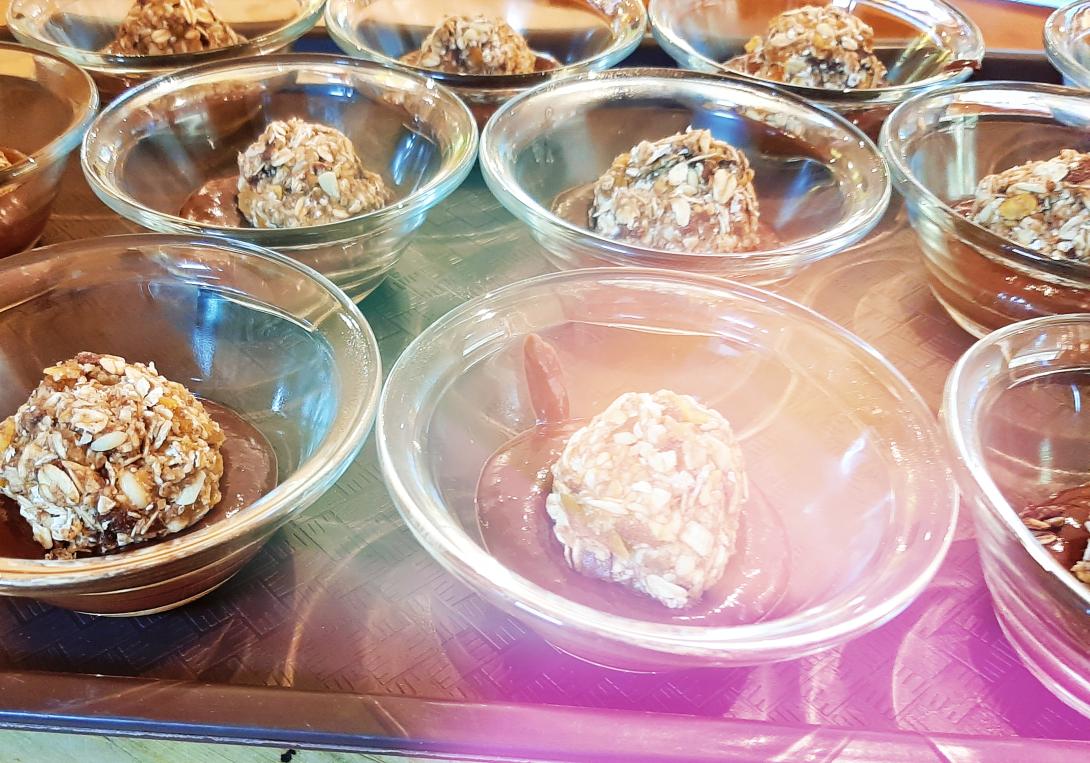
A century-old classic of Polish zero-waste cuisine: the not-quite-Bajadera balls.
The base of this dessert is dates or another sweet dried fruit like figs. Soak dates in minimal hot water, enough for the fruit to absorb and soften. Once cooled, blend to get date cream, a fantastic natural sweetener for desserts, spreads like Nutella, or even as a jam replacement.
The second essential ingredient is oats, muesli, or similar. Oats add protein, fiber, and lower the dessert's glycemic index, preventing diabetes and insulin resistance. I currently use oat muesli with cornflakes and chocolate pieces. Use what you have, or just oats if needed. Chopped almonds, nuts, or orange zest are also great additions.
Roll into balls, larger or smaller as you prefer. And that's mostly it…but not quite. These balls are already a great sweet snack, but to elevate them as a dessert, add an extra element.
Here, I used chocolate sauce: melt chocolate in coconut milk (or your favorite, but I love coconut milk). A water bath isn't necessary; a low flame or the lowest electric setting, a small pot with a thick base, and vigilance will do. Stir continuously to prevent burning. Keep in mind that the sauce will thicken as it cools. Add any other ingredients you like - my "fridge-dodging" mango made a natural fit.
I poured the sauce at the bottom, so you can dip the balls before eating. Of course, you could drizzle the sauce on top.
After making this dessert regularly for my guests, I realized it's a twist on the Polish Bajadera - a century-old zero-waste cake. Exactly a hundred years old, the first Bajaderka was made around 1922 by the Gajewski brothers on Chmielna Street, Warsaw. A perfect reason to visit Warsaw - after all, discovering a new dish is arguably more valuable to humanity than discovering a new star. The brothers used leftover crumbs, a zero-waste, profitable concept since it saved on expensive bakery raw materials.
Back then, Bajadera was rectangular, made in metal trays with scraps mixed with butter-based cream, rum, a pastry crust, and a chocolate coating. My idea of adding chocolate sauce here unintentionally referenced this tradition.
The original Bajaderas were a favorite among Warsaw students who often ate them in place of lunch. This story reminds us that zero waste in cooking isn't new. Historically, it was a necessity, now repackaged by modern consumerism. Don't be fooled; ask your grandma!
Did you like this text? Do you want more similar ones? Support my blog
- Zaloguj lub zarejestruj się aby dodawać komentarze