Baking cakes, cookies, desserts, and sweets isn’t exactly my culinary specialty. Probably because for most of my life, when it came to sweets, I liked them all — as long as they had a lot of chili.
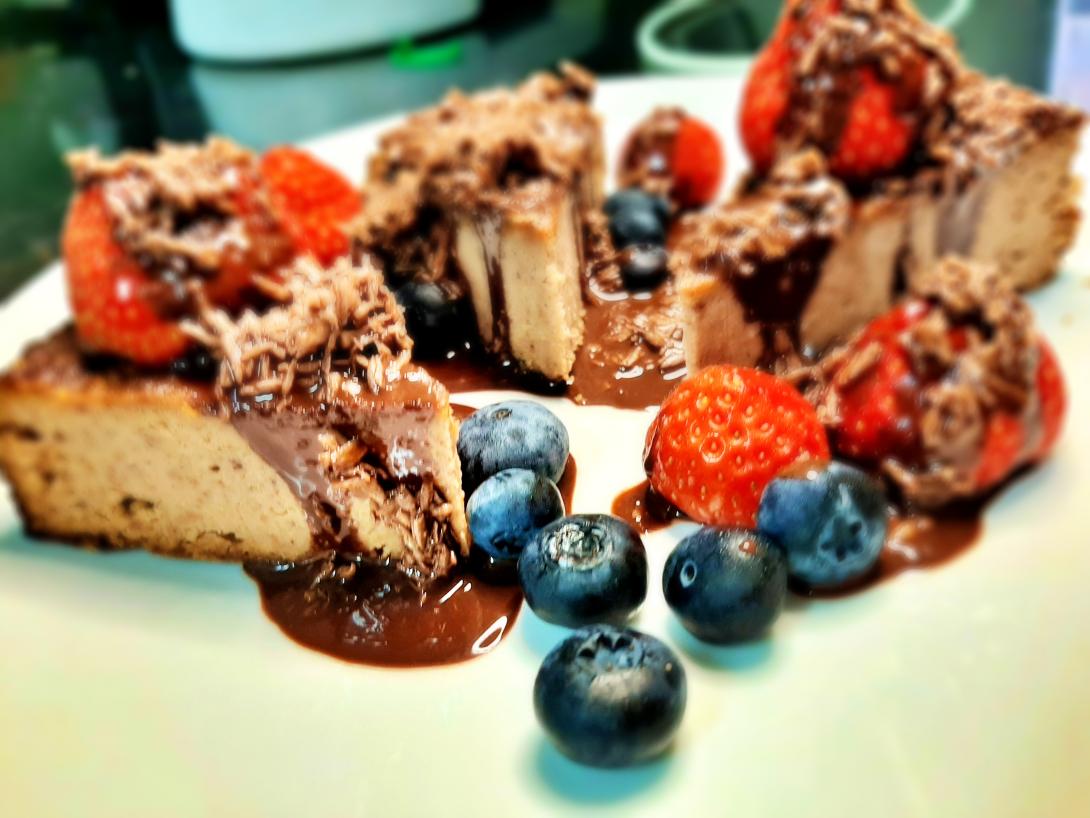
This cake has no chili, but it’s still good.
INGREDIENTS:
- 250 ml cooked millet
- 100 g raisins
- 2 tablespoons lime juice
- 1 can of coconut milk
- 150 g hazelnut flour
- Sugar or other sweetener (optional)
INSTRUCTIONS:
1. Place the coconut milk in the refrigerator for a few hours to thicken.
2. Take out the thick part of the milk (about 2/3) and blend it with the millet, raisins, and lime juice.
— The smoother the mixture, the better.
3. Add the nut flour and blend a little more or mix thoroughly.
— If the mixture isn’t sweet enough, you can add sugar or another sweetener, such as agave syrup.
4. Grease a 17 cm diameter baking pan with oil and sprinkle it with something like polenta.
5. Bake at 180°C (356°F) for about 40 minutes.
6. Leave it to cool completely, preferably until the next day, so it can set firmly.
VARIATIONS:
- Feel free to play around with the toppings. Use something other than chocolate, or add ingredients like candied orange peel or chopped nuts.
- You can also try different flours, such as walnut flour.
SERVING:
- Serve with chocolate glaze, whipped cream, ice cream, or fresh fruit.
- Before serving, you can pour hot melted chocolate over the cake (as seen in the photo with coconut flakes), or serve with fresh nuts, whipped cream, and ice cream.
- An interesting combination would be hot chocolate sauce and ice cream, where you have not only different flavors and textures but also different temperatures, which enhances the sensation and pleasure of eating.
NUTRITIONAL VALUE:
- The cake is high in calories due to the nut flour.
- If divided into portions, one slice (about 120 g) has 260 kcal, 5.5 g of protein, 17 g of fat, and 22 g of carbohydrates.
The nature of my one-man army work forces me to make desserts, cookies, and sometimes cakes. Pumpkin cookies and chocolate millet pudding have become hits among guests. Another simple dessert I serve in season is fruit with yogurt, topped with almond, peanut, or tahini butter with a little sweetener like agave or maple syrup. You can also make this dessert with frozen fruit, ideally when they start to thaw. It’s perfect for hot weather, and is a great alternative to traditional ice cream. You can top this dessert with hot chocolate or finely chopped nuts.
3 Ways to Make Healthier and Tastier Desserts:
1. A Variety of Flavors, Textures, and Colors:
The more diverse our food is, the more delicious, attractive, and enjoyable it becomes. What we enjoy eating is actually determined by the brain. The brain likes it when our food is varied, colorful, and has many different flavors and textures.
Evolutionarily, this increased our chances of survival during times of constant food shortages, which meant not only a lack of calories but also a deficiency in essential macro and micronutrients. Those who chose more varied food had a better chance of survival and passing on their genes, to which we all probably belong.
The same evolutionary mechanism that worked for sugar, salt, and fat also applies to varied foods. Evolutionarily, a diet high in sugars/simple carbohydrates and fats increases the chances of survival. However, their negative health effects reveal themselves after the age of 40 — when, from an evolutionary perspective, we become a burden, and most people throughout history rarely lived to see this age. Hence, the “good old days.”
Today, sugar and fats in the diet are mass murderers of your children. You too, by the way. So it’s good to limit them, and if you do use them, choose better, healthier types of fats and sweeteners without losing the pleasure of eating. Instead of sugar and fat, add appeal with a variety of flavors, textures, and colors.
2. Sugar Is Sugar. No Matter the Type: white, brown or green
This is non-negotiable. But artificial sweeteners aren’t necessarily the answer either.
First, from a taste perspective. To me, all these sweeteners have a specific, nasty aftertaste. The best-tasting one is xylitol, but I don’t use it because there’s a high risk of diarrhea for someone who hasn’t eaten xylitol before. So I won’t serve it to guests.
From a dietary and health perspective, sweeteners aren’t straightforward either. Even the WHO issued a warning about sweeteners some time ago.
Sweeteners also don’t participate in the Maillard reaction, which is crucial for the quality and taste of baked goods. This is where raisins, figs, dates, ripe mangoes, and bananas come in — generally fresh and, most importantly, dried fruits with high sugar content.
Besides sugar, they bring fiber, vitamins, and a high nutrient density, which raises the overall nutritional value of the cake. In simpler terms, it’s healthier than a cake sweetened with sugar and, when done well, at least as tasty.
The same approach should be taken with fats in desserts. Eliminate saturated fatty acids, which means no lard. Unfortunately, butter is also out. Yes, I know. I, too, lament that there isn’t yet a margarine that emulsifies butter well enough, especially in baking.
However, there are flavored oils. In my pumpkin cookies, I used half sesame oil and half peanut oil. A dash of such oils wonderfully enhances the above-mentioned yogurt fruit desserts.
Nut mousse, almond mousse (which I passionately love) or peanut mousse (not to be confused with peanut butter, they are two different products — peanut mousse is semi-liquid and slightly sweet) can also be used as fats. If you use nut (or almond) flour in your recipe, it serves as a fat source as well.
Coconut oil and palm oil are also out. Even cocoa butter, unfortunately.
3. Add Protein:
Here, nut flour is of course a protein source. Nuts and seeds are good protein sources in desserts.
Less obvious ones include chickpeas or beans (red bean cake is amazing), but especially tofu. I recently published a recipe for “cheesecake” ice cream made with tofu.
— Protein lowers the glycemic index, which desserts generally have at Taylor Swift concert ticket levels. In simpler terms, this reduces the risk of insulin resistance and diabetes. It also increases the feeling of fullness, meaning we eat less and stay full longer, which is significant in preventing obesity.
I’d call my approach to desserts, and to many unhealthy food options, “harm reduction.” What do you think of this approach to making healthier yet delicious versions of unhealthy dishes?
Disclaimer: I’m not a dietitian, and my knowledge in this area is purely amateur. However, I strive to be as diligent as possible, following the principles of evidence-based nutrition.
I’d appreciate feedback from dietitians on my concept of healthier desserts.
Did you like this text? Do you want more similar ones? Support my blog
- Zaloguj lub zarejestruj się aby dodawać komentarze