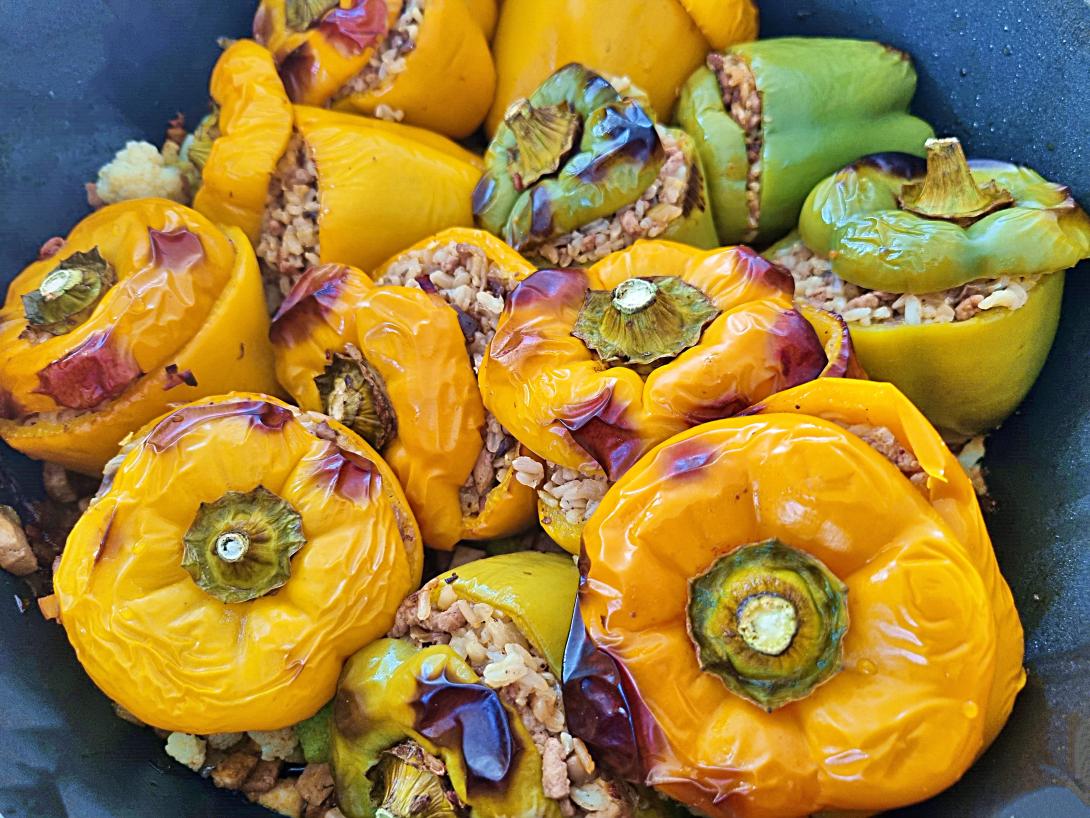
This is food that, firstly, is associated with childhood, a sense of safety, and being taken care of. If someone had a messed-up childhood, like me, well, the experience with “comfort food” can vary. But usually, these are traditional dishes made by mom, made by grandma, somewhat festive dishes, rich, fried, salty, sweet. High-calorie, high-fat, dishes with a high content of salt and/or sugar activate the brain’s reward system. Yes, this is emotional eating, stress eating. It’s important to realize why it’s chocolate and not chili or kale.
How we eat and the reactions of our body and mind to various foods are strongly influenced by evolution, which prompted us to choose fatty, sweet, and salty dishes at a time when calorie deficiency and mineral deficiency (salt) were a matter of survival. It’s worth using this knowledge when composing a menu, even for comfort food, so that it remains as nutritionally balanced as possible and equally or even more delicious.
The term was first used in The Palm Beach Post, a Florida newspaper. Adults under strong stress turn to what can be called comfort food, food associated with childhood safety, such as boiled eggs or chicken soup. Since then, quite an interesting body of scientific literature has developed on the term itself and its unexpected perspectives. Currently, NASA plans to provide Comfort Food to crews during future manned space flights. It would probably be even more interesting if it were possible to establish what Comfort Food really is.
Comfort food can be both social (including all grandmother’s tomato and cucumber soups, Sunday broth, minced cutlet, cabbage noodles…) and individual. For me, comfort food is stuffed vegetables, especially stuffed peppers. It connects with the best thing from my childhood, namely the so-called “allotment” that my father cultivated in the suburbs, where I spent a large part of my childhood. And this is also my comfort food. Fruits straight from the bush or tree, a patch of head-spinningly fragrant tomatoes, young potatoes dug up by my father just a moment ago, rinsed and cooking on the “cooker.”
Private is political, and our nutrition, including comfort food, is dependent on our place in the social hierarchy. Survey research in the USA also showed significant differences between genders. Women’s comfort foods are ice cream (74%), chocolate (69%), and cookies (66%), while men opt for food items like ice cream (77%), soups (73%), and pizza/pasta (72%). Women tend to reach for comfort food in solitude, depression, and a sense of guilt, while men are more likely to indulge or reward themselves.
Actually, comfort food is something that has always existed, and it’s not entirely possible to define or enumerate what falls into this category. The concept itself is relatively new, typical of the late capitalist era, the commodification of yet another sphere of human experience.
Did you like this text? Do you want more similar ones? Support my blog
- Zaloguj lub zarejestruj się aby dodawać komentarze