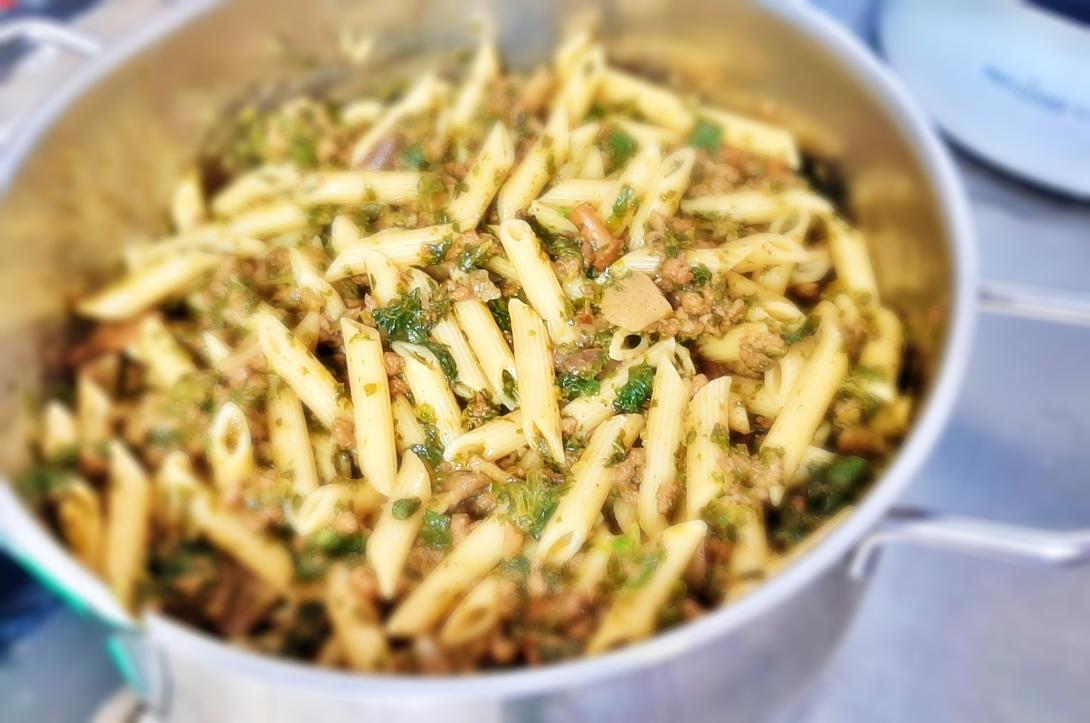
Have you ever tried to buy al dente pasta?
A colleague from catering and I once argued whether the story about a guy trying to buy “al dente pasta” was made up or real. I said it was real — not everyone spends their life cooking or knows kitchen terminology.
Al dente literally means “to the tooth.” Why “to the tooth”? Probably because it describes a slightly firm, undercooked texture that actually requires your teeth to bite through.
To achieve al dente pasta when cooking, start checking the texture about 2–3 minutes before the time stated on the package.
Not every pasta is suitable for this method, either. Some types continue cooking from their own retained heat and slowly turn into a soggy mush on the plate, even if drained at the al dente stage.
These days I use whole-grain pasta (I generally recommend whole-grain pasta — it usually has a more interesting texture and is healthier), especially from whole spelt flour. I used to buy it back in Poland, and I still sometimes reach for Barilla. They make many interesting pasta shapes, for example, bucatini — similar to spaghetti but hollow inside. Recommended!
Al dente is the essential cooking method for Italian dishes and pasta served with sauce. If you mix pasta with sauce, it will continue to cook, so depending on how long you expect between finishing and plating, the pasta should be appropriately al dente.
Pasta cooked this way (like other carbohydrate products such as rice) has a lower glycemic index, which is healthier — especially for the liver — and helps reduce the risk of diabetes and insulin resistance.
Cook al dente!
As long as you still have teeth to chew with — it’s tastier and healthier that way.
In our kitchen world, the best motivation for good work is a good tip. If you like my recipes, leave me a tip
- Zaloguj lub zarejestruj się aby dodawać komentarze