Once very popular in traditional folk cooking, today these ingredients are truly underappreciated and underused. Various grains, seeds, and nuts — from sunflower seeds to hemp (with their phenomenal protein content), pumpkin seeds, and walnuts.
On the one hand, they no longer play the role they once did, when even a hundred years ago, nuts and seeds were an important source of protein and calories in the diet.
On the other hand, even ordinary walnuts have become too expensive to use in everyday cooking.
And thirdly, traditional local nuts have been pushed aside by cashews and ever pricier nuts — pine nuts, Brazil nuts, and those harvested by elves on Mars,
when Martian morning dew settles on Martian nut trees. And that’s why they’re so **** expensive.
INGREDIENTS:
- Cauliflower — 150 g
- Sunflower seeds — 1 cup (250 ml)
- Lemon juice — 20 g (2 tbsp)
- TVP granules — 50 g
- Cremo balsamico — 1 tbsp (plus extra for frying)
- Soy sauce — 2 tbsp (plus extra for frying)
- Worcester sauce — 2 tbsp
- Plant milk — 350 ml
- Smoked salt — 1–2 tsp
- Garlic powder — 2 tsp
- Optional: fresh parsley
- Oil for frying
METHOD:
Steam the cauliflower.
Soak the sunflower seeds in water for several hours. Ideally, do this in the evening or early in the morning if you plan to cook in the afternoon.
Bring the TVP to a boil with the cremo balsamico, soy sauce, and Worcester sauce, and let it sit for several hours or overnight, or at least until fully cooled.
Drain the TVP on a sieve.
Heat 2–3 tablespoons of oil in a pan and fry the TVP with an additional tablespoon or two of soy sauce and a tablespoon of cremo balsamico.
Fry over medium-low heat. Reduce the liquid to zero, then continue frying on low heat, stirring for a few minutes.
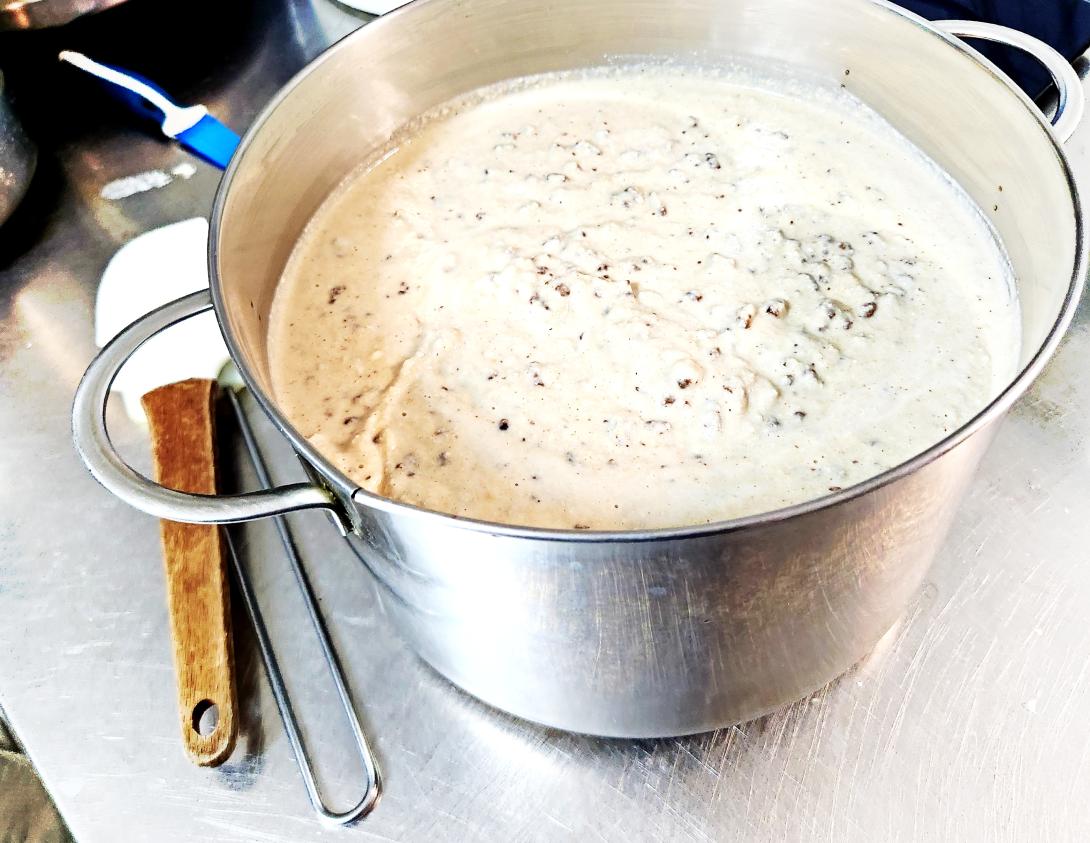
Blend all the remaining ingredients thoroughly and heat gently, stirring. Add the TVP and, optionally, a generous amount of chopped parsley.
VARIATIONS:
You can replace sunflower seeds with cashews, and adjust the “heaviness” and calorie density by changing the amount of cauliflower.
If you want a more “cheesy” flavour, add nutritional yeast.
You can use any type of TVP and umami seasonings you have on hand.
NOTES:
Using cremo balsamico is important because of the sugars needed for the Maillard reaction.
The quality of your equipment matters: the smoother and more finely blended the sauce, the better it will be.
SERVING:
Classically, with pasta — cooked al dente and mixed with the sauce immediately after draining (don’t drain it completely; a little water on the pasta helps).
Do not rinse the pasta! Rinsing washes off the starch, which is crucial for helping the sauce cling properly. This is essential for this style of serving pasta.
Of course, you can also use this sauce like any other: with rice, potatoes, or any main dish.
Originally, this was an almond-based sauce and it turned out very good. If you want to experiment, go ahead. But almonds are expensive — and since functionally they’re not much different from sunflower seeds (protein and fat in similar proportions), and sunflower seeds are more than three times cheaper…
And that’s the key point for most of us. For, conservatively speaking, 80% of society, good, balanced cooking also has to be financially balanced.
It shouldn’t be significantly more expensive than highly processed junk food.
I often write about the role of diet in public health, free school lunches, and similar topics, and I always try to emphasize this:
For a healthy, sustainable diet to become widespread, it has to meet two conditions: it must be tasty and it must be cheap.
It’s not easy, because the competition is highly processed foods full of fat, salt, and sugar, which boost palatability. You can’t beat that with kale chips. But I think sunflower sauce stands a chance.
What do you think?

- Zaloguj lub zarejestruj się aby dodawać komentarze