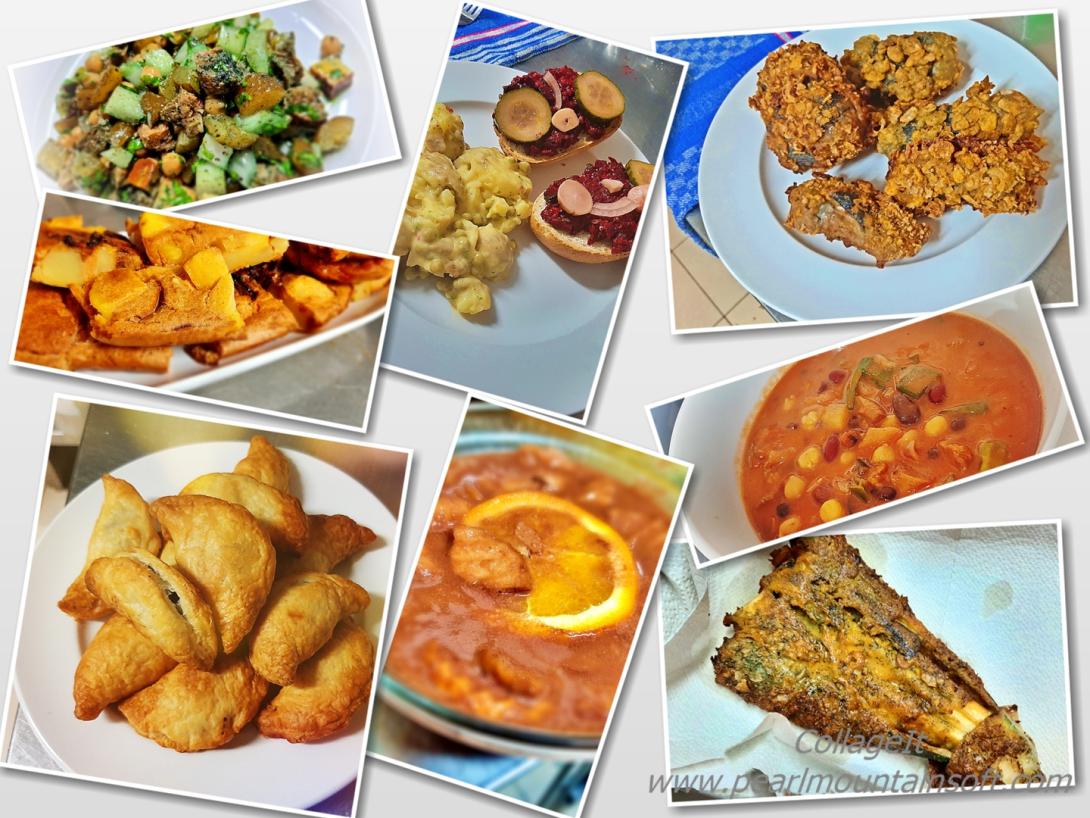
Born and raised in Poland, I've only been living in Germany for a few years now. Nothing illustrates the phenomenon of Polish Christmas Eve (Wigilia) better than the reactions of my German friends when I tell them about the traditional and widely practiced Polish Christmas Eve.
The most unique and shocking tradition for other nations is the Christmas Eve dinner consisting of 12 dishes, the selection of which is governed by an algorithm as mysterious as Facebook or LinkedIn.
I wasn't raised religiously, to say the least. My father was the last ideological communist in the Polish United Workers' Party (PZPR), hence an atheist, and my mother had her issues with the Roman Catholic Church from her childhood spent in an orphanage run by nuns. But one religious tradition prevailed in our family—Christmas. Wigilia, with a Christmas tree, 12 dishes, gifts, and a special notebook listing the Wigilia dishes from previous years.
Similarly, many non-religious families in Poland practice the Christmas Eve supper, sometimes more as a family tradition and an opportunity to gather the entire family around the table than as an important religious ceremony.
There was something magical about it. Because those dishes, those recipes were almost forbidden during the rest of the year. Actually, right from the beginning of December, the life of the whole family revolved around Christmas. Preparations, shopping, cleaning—basically, Advent. A time for shopping, cleaning, and being scolded with a shout of 'Leave that! It's for Christmas.' There aren't many Advent wreaths in Poland, unlike in Germany, but that's probably because wreaths are more of a Protestant tradition than a Catholic one.
A rich topic for anthropologists or ethnologists. Although it's not entirely accurate to call this celebration of Christmas in Poland a 'Wigilia,' as a similar celebration is observed in Ukraine and Belarus. It could be called the Christmas Eve of the Commonwealth.
And that's symbolic. The origin of this tradition from the territories of the Polish-Lithuanian Commonwealth, with two nations—the noble and the peasant. A division stronger than in caste-based India. With peasants in the role of Dalits or black slaves in America. This rupture between the noble and peasant classes (of course, a huge simplification) is visible in cuisine as well, including how Christmas was celebrated.
Of course, the Christmas Eve supper varied by region. But for example, in my family home in Szczecin in western Poland, kutia from the eastern borderlands was served every year.
History has so effectively mixed and resettled not only Poles in this part of Europe that I regularly meet someone here in Lower Saxony who says their father, grandfather, or mother came from Poland. They're probably Germans who fled or were displaced in '45. Most are probably former residents of Lower Silesia and other regions.
This is the essence of what living tradition in cuisine is—different influences, styles, and traditions influencing each other and serving as inspiration. What's on the table also, as it always has been, depends on the wealth of one's purse or, more precisely, one's estate. The table and cuisine, like everything else, are class matters. And, as people say today, status matters.
So, consumption for display to elevate one's social status. Wigilia was an excellent opportunity for this among the wealthiest in old Poland—culinary illusions becoming increasingly fanciful.
These illusions were popular on the tables of the rich nobility and magnates—milk and almond cheese or fig sausage (yes, a few hundred years ago!), or fish shaped like a piglet, where fasting ingredients imitated meat, or more generally, dishes where one ingredient imitated another, or as elaborate as 'capon in a bottle' (the skin of a capon was pushed into a glass bottle, stuffed, and carefully cooked in the bottle so that guests at the table had the impression that by some magical trick, the whole capon was pressed into the bottle). The aim was to create a dish that tasted like something else, to change the shape of the product to imitate a completely different dish, to surprise, shock, and dazzle guests.
Jędrzej Kitowicz, an 18th-century Polish historian, listed popular Polish spices and dried fruits such as almonds, raisins, nutmeg, cloves, nut, ginger, pepper, saffron, pistachios, lemons... among the spices and dried fruits popular in old Polish cuisine. This was influenced by the geographical location and the occasional border with Turkey, the gateway to the East and its delicacies. Poland waged wars with Turkey and traded with them. I wrote about an intriguing character who won the battle of Vienna and founded the first Viennese café.
For the poor (that is, about 90 to 70% of society), there might have been fewer dishes, simpler ones made from cheaper ingredients—dishes like Christmas bean soup or cabbage with peas. For the wealthier, the dishes were also fasting, but much more elaborate and made from more expensive ingredients.
That was/is the most important element of Polish Wigilia—sumptuous, laden as it used to be said, with a richly set table. But many interesting customs are associated with the Polish Wigilia, not just the worldwide tradition of gifts under the Christmas tree.
- Christmas Eve starts with decorating the Christmas tree, a task assigned to children under the supervision of an elder. In the past, apples and other fruits and sweets were hung on the tree. Sometimes quite specific, I still remember from my childhood in the 70s, sweets wrapped in colorful cellophane—special 'Christmas candies' in the shape of long, narrow rolls, so hard that if someone tried to eat them, it wasn't clear whether they were crunching the breaking candy or their tooth.
The tree stands until January 6, the Epiphany. The Three Kings' procession is often associated with a star (Bethlehem star) placed at the top of the tree. The appearance of the first star signals the start of the holiday, the supper, and the unwrapping of presents.
- Hay or straw placed under the tablecloth. This is a reference to the stable where Jesus was born.
- An empty chair and an empty place setting for an 'unexpected guest' left at the table. This tradition dates back to pre-Christian times when it was believed that the dead passed through the Earth around the solstice. Often interpreted nowadays as the place that was missing for Mary and Joseph at the hostel in Jerusalem.
- The 'opłatek.' This is a remnant of Jewish matzo bread and a reference to the breaking of bread by Jesus and the apostles. A rectangular, very thin bread wafer, made from white wheat flour, unleavened (not fermented and unsalted), without the addition of yeast, baked in molds with images, most often depicting scenes from the Holy Family's life. Each Christmas Eve supper begins with all guests breaking the opłatek with each other, accompanied by exchanging wishes. In Silesia, children often receive opłatek smeared with
honey, and in the countryside, apart from white ones, colored opłateks are used for variously colored animals. And while we're on the subject of animals,
- Not so much a custom as a belief that on Christmas Eve night, animals speak in human voices. I tried to talk to my dog as a child. But I guess he didn't deem me worthy of conversation.
- After the opłatek comes the unwrapping of presents and the feast. The first course is usually soup, beetroot borscht, or another type. Although, for example, in Silesia, the traditional Christmas soup is often made from dried fruit.
-Borscht deserves special mention here. It's a popular soup in Poland and Ukraine, made from a sourdough base, consisting of vegetables or flour set several or a dozen days earlier for fermentation, often with the addition of garlic. Red beetroot borscht made on a sourdough base is the king of Christmas Eve soups.
-After the borscht, it's time for the next of the 12 dishes. This part is the core and the most significant differentiator of Polish Wigilia. Even if you're full, you have to try all of them because the number of dishes you try will determine the good things and pleasures that will come to you in the coming year. The number 12 is most commonly associated with the 12 apostles, although nowhere have I come across a dish symbolizing Judas.
-Wigilia was strictly meatless and dairy-free. And without alcohol. Unfortunately, the latter custom is fading away more and more.
-The observance of Wigilia ends, as in many countries, with Midnight Mass, or as in many countries, it's an opportunity for young people to meet somewhat unsaintly outside the church and open a bottle or two.
This doesn't cover the entire symbolism of Polish Wigilia. There is an extensive and rich tradition of choosing these 12 dishes for the Wigilia table, reaching back often to pre-Christian times. I'll continue on the symbolism and the choice of dishes in the next part."
- Zaloguj lub zarejestruj się aby dodawać komentarze