All the guests have left already, the weather is… Tippischenorddeutcheswetter, meaning rain turns into drizzle or downpour half the day, so not exactly the time to go anywhere.
Although… I’ve survived rainy walks before.
A year ago, I got caught on my way to the city (6 km) for a train to Hamburg, just on the outskirts, luckily, by the storm that swept through Hamburg and wrecked the fan zone at Millerntor.
I think that was the first time I ended up at Café Miller. The name is puke-level generic, although not entirely — it’s not a surname, but from Millerntor.
Once one of Hamburg’s city gates, now the Millerntor Stadium of the FC St. Pauli team.
If you’re worried about football hooligan vibes, it’s good to know FC St. Pauli is a pretty unique club.
Not just because the fans, not billionaires, own it. And though we’re in the ERSTE Bundesliga now, it’s still a neighborhood club — a Kiez Club. Everyone’s welcome here.
Almost everyone. Except sexists, racists, homophobes, and similar assholes.
Nowadays, Kiez is best translated as the hood. Where your people live, good folks all around.
Of course, St. Pauli is my favorite part of Hamburg. Punks, hookers, beggars, junkies, dealers. Feels like home.
St. Pauli — and especially the Reeperbahn, its main drag and Germany’s wildest party street — is also one of Hamburg’s most dangerous areas.
But remember: booze, drugs, prostitution always come with high crime.
Simple rule for staying safe: don’t get wasted. I know, it’s hard in Hamburg on the weekend. But don’t say I didn’t warn you.
And always carry some change for the homeless and beggars — there are loads of them.
Because if you’re reading this, even planning to party or sightsee in St. Pauli, you’re already in a much better place than someone asking for coins.
And remember: they have the same human dignity as you.
And don’t take pictures — this isn’t a freak show or panopticon. Though speaking of Panopticon — there is one in St. Pauli, go see it.
Because you can get punched. And rightfully! And you might not be as lucky as I was. The whole thing might not end up more funny than scary.
I’m sitting, watching the weather, checking forecasts to see when I can make it to Hamburg.
After years in a big city, it’s still refreshing to be this weather-dependent.
Just like waking up to birds outside instead of cars.
And having to walk 6 km to a train, and buses only on weekdays.
Trade-offs… but damn, my leg muscles!
I once saw a cartoon of a hermit in a cave, sitting with a laptop — captioned: “communicates with the world only via the internet.”
On a day like this, mid-summer, with 1.5 km to the bus stop, I kinda feel the same.
So I sit with my laptop, flipping through photos from my outings, and something started to take shape:
“A Subjective Non-Guide Not Only to Hamburg.”
A look at places and sides of the city you won’t find in tourist guides.
Like the Junkie Park in the center of Hamburg.
I remember two years ago, after several visits to Bremen in a short time, when I got to know a Polish homeless guy living in the City Park (right by the anti-colonial elephant monument), I googled some info and came across a travel piece titled:
“Bremen — A Fairytale City.”
And I got punched in the face.
Must’ve been a fairytale the Brothers Grimm wrote on a really bad day.
In guidebooks, Hamburg’s Saint George is a charming old LGBT neighborhood with clubs and world cuisine (is true!).
But there’s not a single word about hookers, junkies, dealers, mafia shootouts, or the kindergarten surrounded by razor wire.
Hamburg probably has more monuments and memorials to victims of Nazism and resistance than Warsaw. One of them: the Deserters’ Memorial.

Hansa Platz in St. George. Nearby is the kindergarten behind razor wire and the pub where, in January, a killer sent by the Mocro Mafia opened fire.
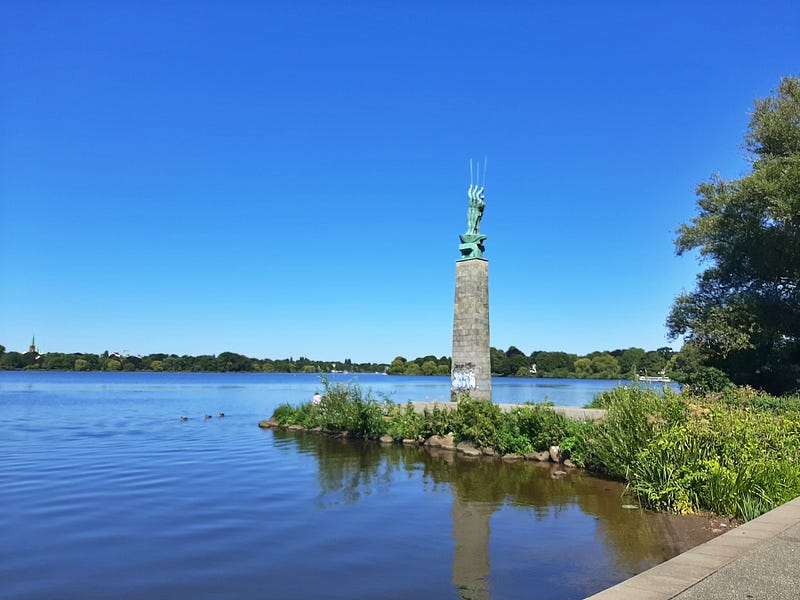
One of the two artificial lakes — Alster — in Hamburg.
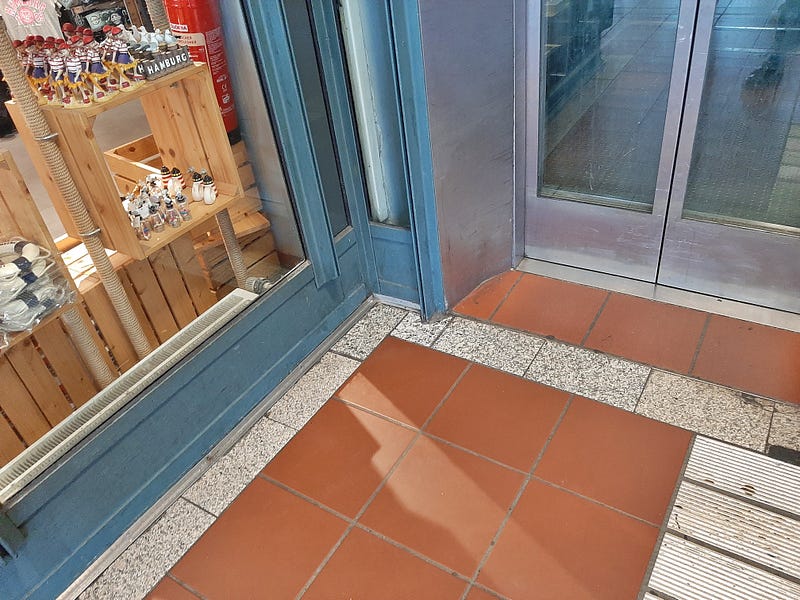
I slept by that elevator last year after a Violent Instinct gig. Totally worth it.
Hamburg Hauptbahnhof was once the most dangerous spot in Germany — but put that in context: it’s Europe’s second-busiest train station, with 450–500k travelers daily. A microcosm.
For comparison, Bremen (the city) has about half a million residents.
A street in Hamburg-Harburg where the 9/11 attackers lived. Close to the technical university where they studied, and the airport across the city where they took flying lessons.
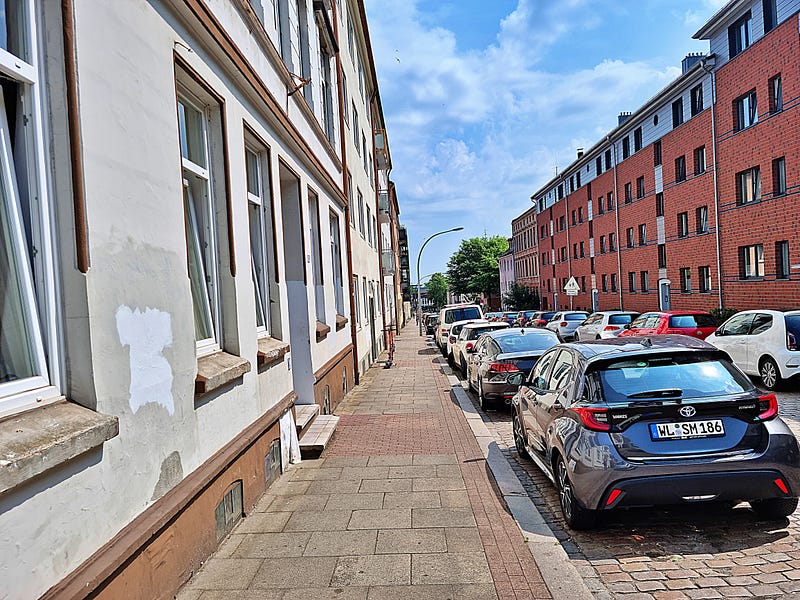
Rent in Hamburg now hits €100/m². More and more people working in the city can’t afford to live there. Gentrification is in full swing. St. Pauli, Gängeviertel — you can see the damage.
Still, St. George and Münzviertel are inner-city holdouts.
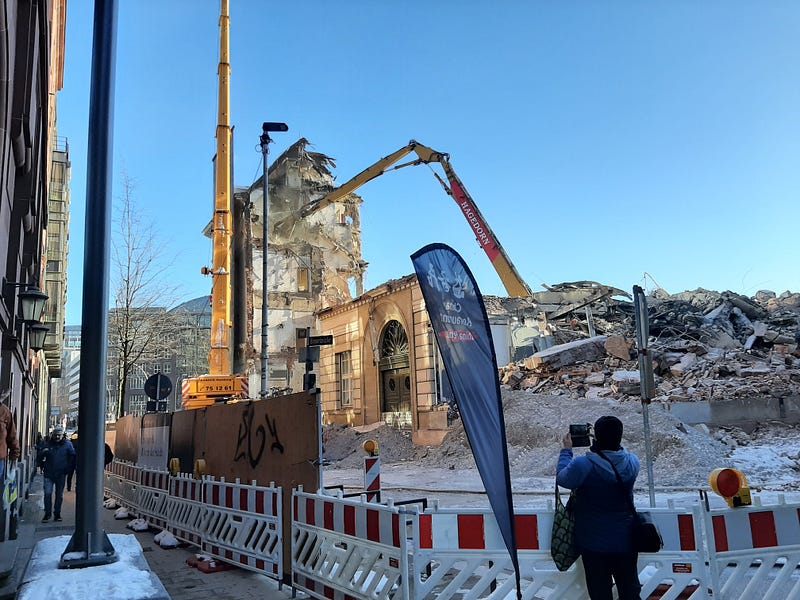
In the photo: demolition of old buildings near the port. Money talks.
- Graffiti, murals, and street art — especially in “rougher” parts of town — are often absolutely top-tier.

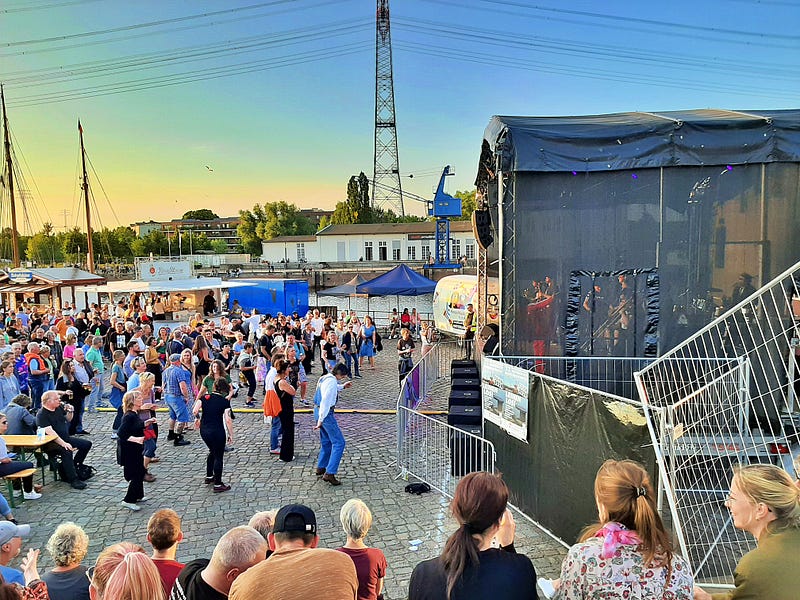
Harbor's birthday party in Hamburg-Harburg last summer. Awesome ska concert by Hamburg’s own Skaramanga, in the Spirit of ’69 vibe. This year they played Hafengeburtstag, Hamburg’s biggest event.
Planten un Blomen. Hamburg is a very green city — 71% of the area is green space. That’s more than any major German city.
Among European capitals, only Oslo is greener (72%) — the next closest Bern, is more than a third behind (52%).
Planten un Blomen and Schanzenpark are my favorites.
I wrote about Schanzenpark last year
What’s going on now even exceeds my old fears.
The streets are flooded with crack.
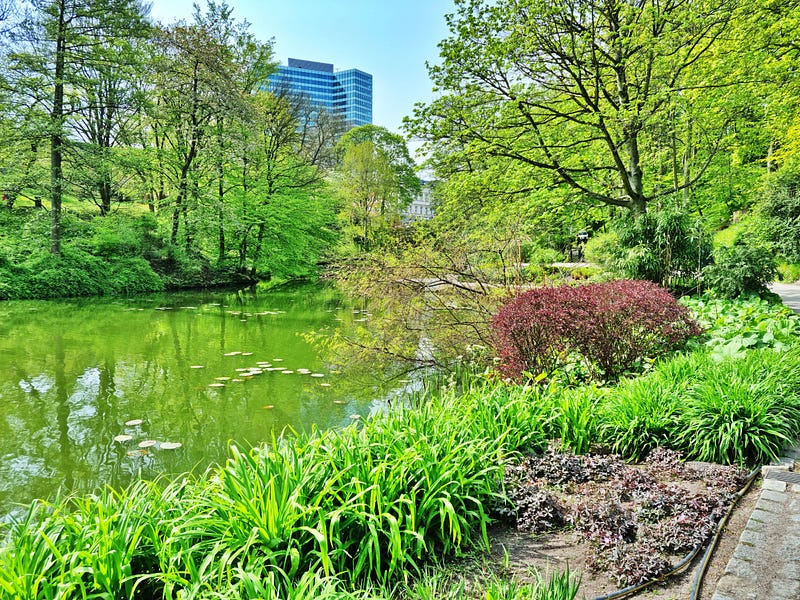
A shot from one of my walks in Planten un Blomen.

In the gastro world, nothing says “thank you” like a tip.
If my Non-Guide made you laugh, think, or want more — feel free to drop me a tip
And let me know what else you’d like me to write about — Hamburg or beyond.
View rudekitchen's Linktree to discover and stream music from top platforms like YouTube, Spotify here. Your next…linktr.ee

- Zaloguj lub zarejestruj się aby dodawać komentarze