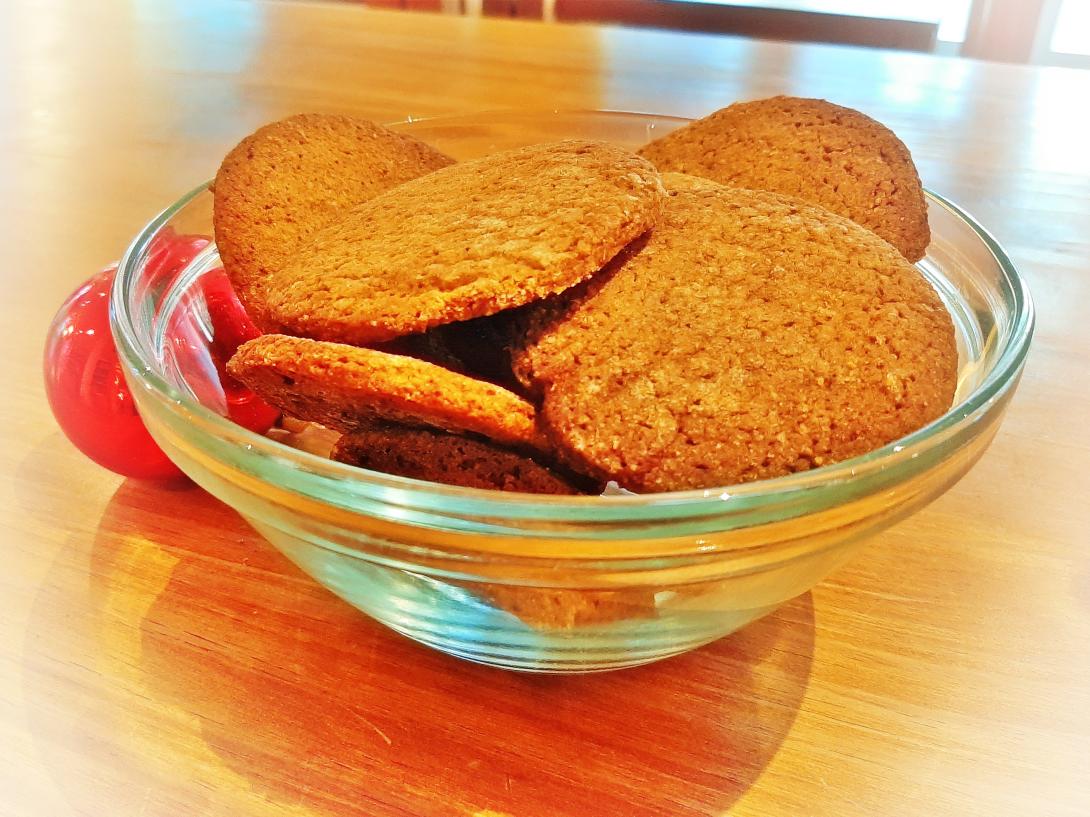
Kemm’s Kuchen, also known as Hamburg gingerbread, is a traditional Christmas cookie from the heart of Hamburg. Its history dates back nearly 250 years. In 1782, master baker Johann Georg Kemm baked his first brown Christmas cookies on Lange Reihe in St. George, in central Hamburg.
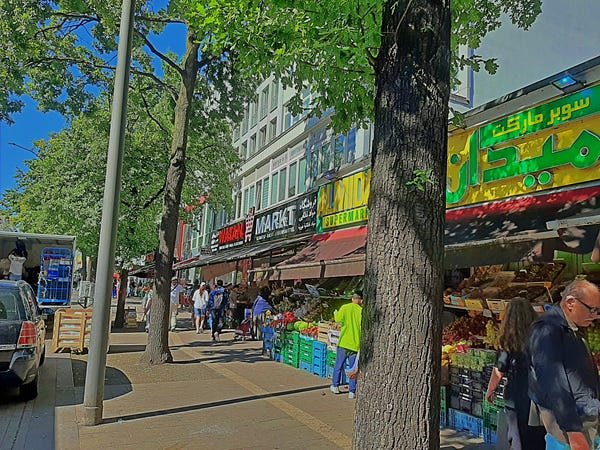
St. George is a district in the center of Hamburg where expensive boutiques and tourist spots sit alongside much cheaper immigrant stores offering exotic foods. Here, you might encounter drug users and prostitutes, while the LGBTQ+ community mingles with immigrants from all corners of the world. Among them are Islamists, who have held demonstrations in St. George several times.
INGREDIENTS
Dough 1
- 300 g rice syrup, agave syrup, or another type of syrup (maple syrup works perfectly)
- 50 g rye flour (type 1150)
- 250 g wheat flour (type 1050)
Dough 2
- 320 g coconut oil
- 45 g powdered sugar
- 2 g salt
- 8 g ground cinnamon
- 1.5 g ground cardamom
- 1 g ground cloves
- 1 g ground coriander seeds
- 1 g ground anise
- 3 g potash (potassium carbonate) + 5 g water
- 3 g Hirschhornsalz (ammonium bicarbonate) + 5 g water
PREPARATION
Dough 1
Mix the syrup with the rye and wheat flour. Wrap the dough in cling film and leave it in the fridge for a week. It should rest for a month. Mine matured for nine days.
Dough 2
Take the dough out of the fridge in the evening to warm up and soften by the next day.
Knead the dough, preferably using a stand mixer, gradually adding coconut oil, then powdered sugar, salt, and spices.
Add Hirschhornsalz dissolved in water, knead, then add potash dissolved in water. Knead the dough for several minutes until it is smooth and well-mixed.
I knead it for 10 minutes in a stand mixer at medium and high speeds.
Wrap the dough in cling film and leave it in a relatively cool place, but not in the fridge, until the next day.
The next day, divide the dough into smaller pieces and roll it out. Traditionally, the cookies should be thin, but I made mine a few millimeters thicker since I intended to use them for makówki, a traditional Silesia Christmas Eve dinner sweet dish.
Traditionally, they are cut into rectangles of 3 by 6 centimeters. I used a 7 cm ring mold because that’s what I had on hand.
Bake for 15–20 minutes at 180°C.
They turned out to be fantastic both as an ingredient in makówki and on their own as traditional Hamburg Christmas cookies. The spices give these cookies that characteristic German Christmas flavor. I veganized the recipe of Hamburg master confectioner Adolf Andersen, the heir to a family of pastry chefs who ran Café Andersen in Hamburg for nearly a century, from 1919 to 2002.

Did you like this text? Do you want more similar ones? Support my blog
- Zaloguj lub zarejestruj się aby dodawać komentarze