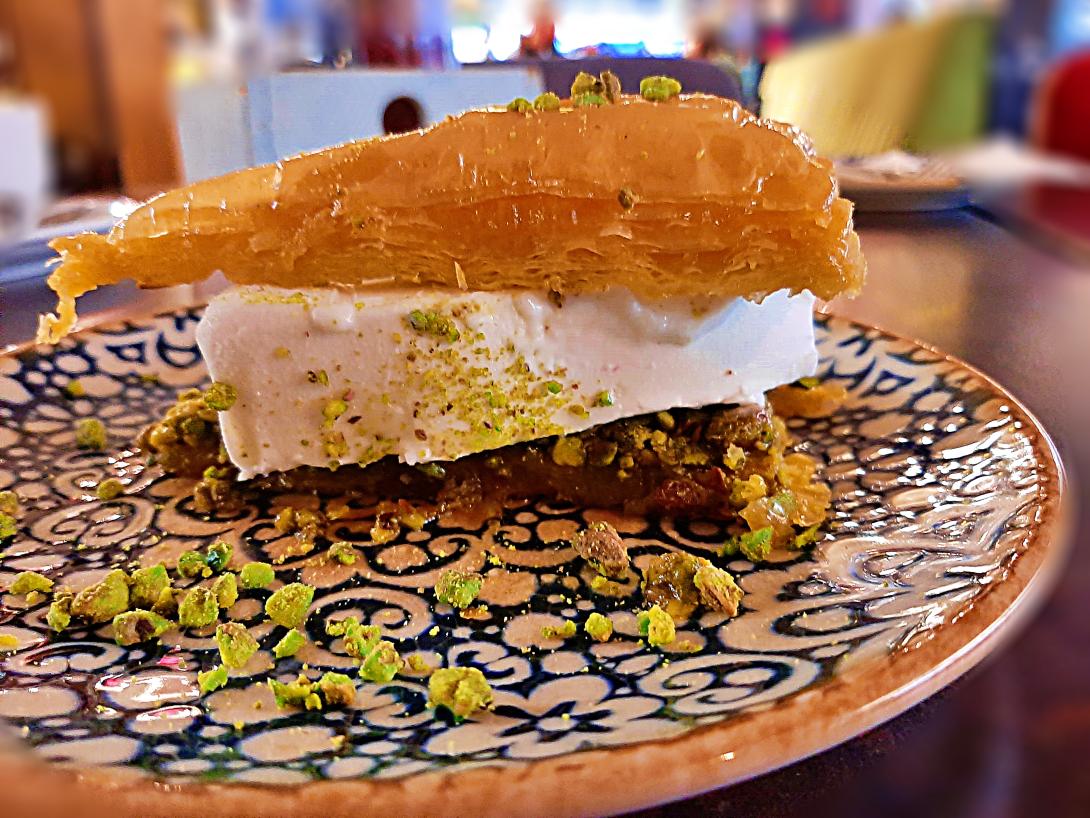
Who’s tempted?
What would you say to a delicacy like this? An exclusive, high-quality, and very expensive chocolate. With a distinct moldy note. And no, it’s not about some new product using camembert mold in chocolate. It’s about the latest hype in the food world — Dubai chocolate, which, in practice, turns out to be more moldy than pistachio.
Stiftung Warentest, a German foundation established by the government in 1964 to test products and services and inform consumers, recently reviewed Dubai chocolates. They tested six of them.
“We didn’t find any exceptional flavor or quality, but we did find mold toxins and fat contaminants.”
The fat contaminants included 3-monochloropropanediol and glycidyl esters — potentially carcinogenic substances — found in two bars. One chocolate also contained carcinogenic aflatoxins from mold.
The levels of these substances in the chocolates should not negatively affect health. Still, their presence is an alarming signal, for example, regarding sanitation control processes and food safety standards in chocolate production.
The second disqualifying feature of these chocolates was the taste. A strong, intense pistachio flavor appeared in… just one chocolate. The rest had a generic nutty flavor.
In three of them, the pistachio content wasn’t even listed. One had 19% pistachio, two had 10%. There are no legal requirements for this, but skimping on the main expensive ingredient affects both quality and taste.
Notably, the chocolates that didn’t list pistachio content on the packaging shouldn’t be sold in Germany — or anywhere in the EU — because they lacked required information about ingredients, nutritional values, and allergens.
The price for 100g of these treats ranges from €6.80 to €24.90.
This isn’t the first controversy for Dubai Chocolate in Germany. In January, a court in Cologne ruled that Lidl must stop selling a product labeled “Alyan Dubai Handmade Chocolate,” which misled customers about its origin. Despite the name, the chocolate was made in Turkey, just like at least half of the “Dubai chocolate” on the German (and likely European) market.
Even earlier, in December 2024, food safety authorities in Baden-Württemberg tested eight samples — five from the UAE, three from Turkey — and found palm oil instead of cocoa butter, artificial dyes, and production contamination.
Dubai chocolate’s popularity, especially in German-speaking countries, is a step beyond “Instagrammable” cuisine: a product made famous largely through TikTok videos.
Not long ago, in the Turkish bar Grand Café Back-Lava in Hamburg — famous for the best baklava in the city, based on traditional recipes from Gaziantep — they served me a signature dish: Dubai-style ice cream with baklava. “Dubai-style” means pistachio paste.
And it was excellent. No surprise, since pistachios, sugar, crispy filo/puff pastry — proteins, simple carbs, and fats — are a combination evolution has programmed our brains to love.
The adjective “Dubai” has become a synonym for sweet pistachios, especially paired with kadaifi, baklava, pastry strands — a new flavor trend boosted by viral TikTok marketing. It’s nothing new in marketing: social proof and a touch of affordable luxury. I have no idea, and frankly, it doesn’t matter whether this was a planned campaign or an organic viral trend.
What matters is what these tests and failures reveal about such hyped products?
When something explodes on the market, its quality and safety tend to drop dramatically. Low prices ensure low quality, fraud, and contamination — but high prices don’t guarantee anything.
So why does this happen, from a chef’s perspective?
It usually starts as a small-batch “craft” product, with every batch checked by the chef, often the recipe creator.
Even adding the exact same amount of spices won’t guarantee the same flavor. Spices vary in freshness and intensity, even from the same brand. The key is the chef’s refined palate.
As production scales up, others take over. Eventually, it becomes automated, based solely on the recipe.
If it’s done well, with good ingredients (which is often not the case, as research shows), and priced appropriately, it might be better than something made by a mediocre chef — but it will never match what’s made by a skilled chef.
Large-scale production is always cheaper than handmade. And this impacts quality.
If we want the best-quality pistachios, someone has to spend time sorting — so from a kilo of pistachios, maybe only 200g make the cut, while the rest go to cheaper chocolates. (Just a rough estimate — think Pareto principle.)
Another issue, especially with products whose popularity skyrockets, is safety.
When production speeds up, corners are cut. Food safety standards get ignored. The result? As in the German studies mentioned, contamination.
Mold is a typical pistachio contaminant, and one reason pistachios are expensive. Every batch should be checked for mold. This increases production time and costs. But when manufacturers rush to meet demand, safety checks are dropped or done poorly.
So, how can we handle this?
1. When a niche, luxury, small-batch product becomes mass-produced, its quality and safety drop, especially if it’s imported from outside the EU. The EU’s food safety standards are, in my view as a professional chef, a remarkable civilizational achievement.
2. If you like trends and new flavors, test early, before quality is diluted by hype and mass production.
3. Read labels: ingredients, nutrition, allergens. Follow organizations like Stiftung Warentest. Not because it’s your duty. Product quality and safety shouldn’t fall to individual consumers or even consumer groups.
It’s another example of shifting costs onto individuals. Time spent reading ingredients and researching should be covered by those producing and selling the product, not you. This is individualizing profit and socializing the cost.
4. A more rewarding option? Visit a good local place like Grand Café Back-Lava in Hamburg’s St. George district. Where a skilled local chef might serve you pistachio ice cream with handmade baklava. A place known for quality. A chef uses trendy flavors to create something original. A culinary experience far better than mass production ever could offer.
If you enjoyed this article, you can show your appreciation by leaving me a tip
- Zaloguj lub zarejestruj się aby dodawać komentarze