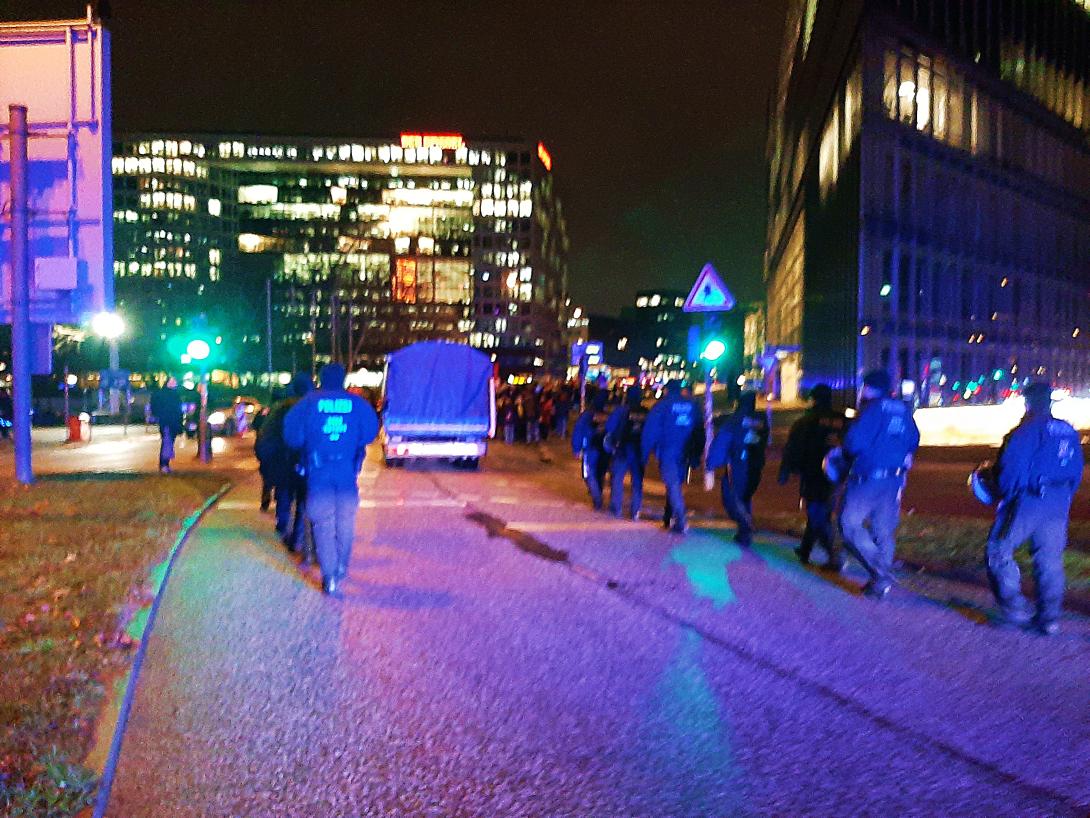

The beginning of December marks the season of Weinachtsmarkt across Germany, which starts at the end of November. In Hamburg, there are dozens of them. The largest one is in front of the town hall. Many, like the one in the picture, are simpler setups. Along a street or in a square, you’ll find a dozen, twenty, or thirty stalls offering food but primarily drinks. Sometimes, they even lack an essential feature like a carousel.
But there’s always the staple: mulled wine. “Mit Schuss oder nicht”, meaning with a shot of strong alcohol or not, is the cornerstone of the Weinachtsmarkt gastronomy. The price for mulled wine without a shot is €4, plus a €3 deposit for the mug.
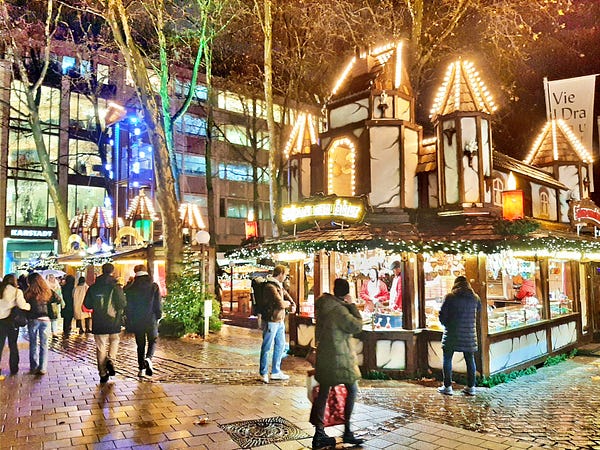

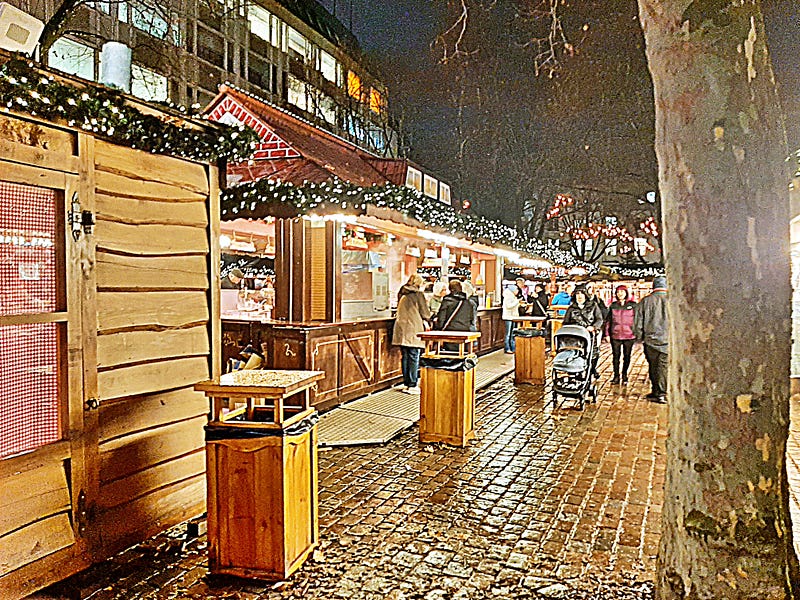
The mugs are beautiful — I nearly stole one, but more on that later. It wouldn’t have been stealing, since I technically paid for it. Holiday decorations are everywhere. All of Germany looks like an alternate universe where romantic comedies take place. It’s hard to believe that these same people could once have boarded tanks to invade Poland.
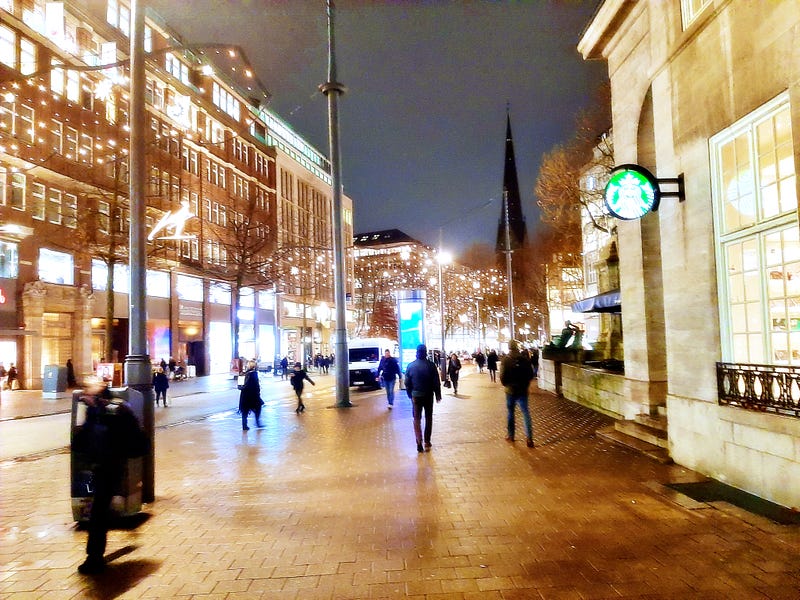
I think this paradox is somewhat explained by the type of food available at the Weinachtsmarkt. Nutella pancakes, “Schmalzkuchen” — deep-fried dough balls (theoretically fried in lard but more likely in oil — high five, Thua!) — “Bratwurst”, kale with sausage. Thats all. With this kind of cuisine, I might also prefer to hop in a tank and invade Poland just to gorge on pierogi, contrary to appearances.
I’m walking from the Hauptbahnhof (main train station) to the “Gänsemarkt” (Goose Market).
https://maps.app.goo.gl/XSk7FE81mybivNoPA
It’s about a 20-minute walk. In December, though, that depends on how many times you stop for mulled wine. It’s easy to understand why mulled wine is so crucial here. The second major attraction in Hamburg and all of northern Germany in December, besides the Weinachtsmarkt, is “Typischnorddeutscheswetter” — typical North German weather. At this time of year, that means a few degrees above zero and drizzle alternating with rain or more drizzle. If it snows, as it did two weeks ago, it’s usually wet snow, leaving mud and water everywhere. Such is the charm of life in and around a port city.
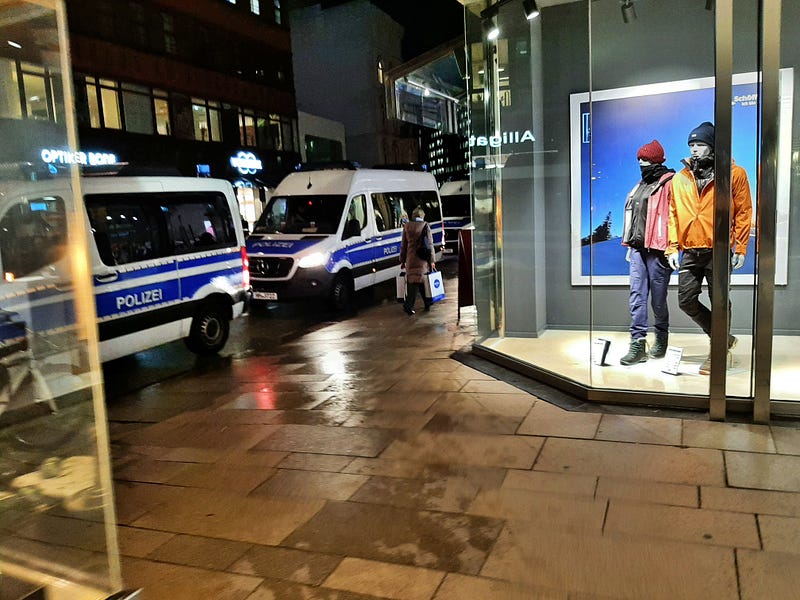
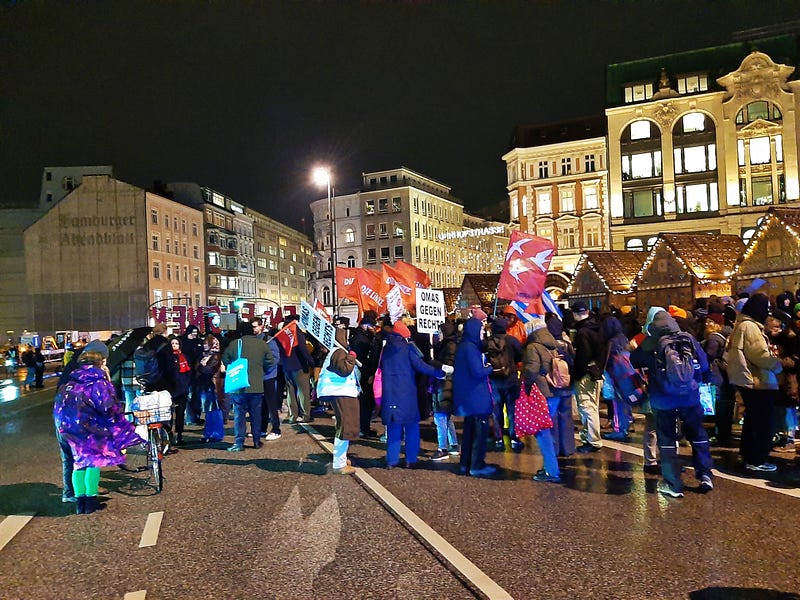
As I approach Gänsemarkt, I pass several police vehicles. Despite the drizzle, hundreds of people are standing in the street with banners, right next to one of the many Weinachtsmarkts. My German is at the “entschuldigung, mein Deutsch ist nicht gut” level, so I can barely catch a single word from the speeches. But I do get a flyer from the best anti-Nazi organization ever: “Omas gegen Rechts” (“Grandmas Against the Right”).

And it makes perfect sense. The generation of 1968 is now at least seventy years old, and it was they who, in Germany, most strongly demanded a reckoning with the Nazi past. That’s why in the 1970s and even the 1980s, trials were held in the Bundesrepublik for Nazi war criminals, who had assumed they would never face justice, such as the SS men from Sachsenhausen concentration camp, sentenced to life imprisonment in 1970. I can only bow my head and thank this generation for their service to society.
The demonstration includes many different groups. The main organizer is the Hamburg Tenants’ Association, but there are many flags and banners I don’t recognize. People of all ages participate, from the aforementioned grandmas to young people, and everyday citizens fed up with high rents in Hamburg and the housing crisis affecting all of Germany.
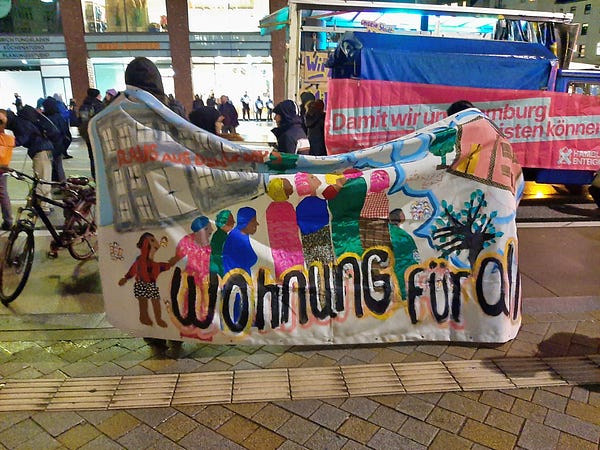

Already last year, the cost of renting a single room (not even an apartment!) in Hamburg was as high as €1,000. Now, the price for an apartment has reached €100 per square meter. One of the most cursed words in human vocabulary — **gentrification**. St. Pauli, Gängeviertel, or Münzviertel are neighborhoods in Hamburg where gentrification is destroying local communities, pushing residents to suburban areas because they can no longer afford the rising rents. It’s a surreal sight in areas like Gängeviertel, where modern office buildings sit next to hundred-year-old, dilapidated tenements.
Over the past few years, during my trips to Hamburg, I’ve noticed more and more people, especially immigrants, commuting further and further from Hamburg during rush hour.
Germany is said to be short of about a million housing units. Last year, out of the government’s plan to build 400,000 units, only 295,000 were completed. The demonstration coincides with a housing summit in Berlin attended by the housing minister. From what I know, similar protests were held in many German cities. Key demands include the introduction of a nationwide rent cap (**Mietendeckel**). Local authorities can currently implement such caps; they are in place in about 400 municipalities, including Hamburg, Bremen, and Hanover in my region of Germany, but landlords often find ways around them.
Protesters are also calling for increased investment in public and cooperative housing, a halt to gentrification-driven evictions that destroy local communities and increase homelessness, and tenant protections against evictions. Homelessness in Hamburg is a separate, complex issue. The second-largest city in Germany and the jewel of the Hanseatic League has the highest proportion of homeless people relative to its population in the country.
Germany does offer some mitigation through social benefits. Starting next year, the housing benefit (“Wohngeld”) will increase to an average of €400 per household. Additionally, a heating allowance of €1.20 per square meter will be paid starting in January.
However, compared to housing prices in Hamburg and other major cities, this isn’t much. The number of working poor is growing in these cities, along with those whose lives are consumed by work and commuting. For instance, my fellow passengers on the Heidebahn (what a romantic name — “Heathland Railway,” though hard to believe that at the end of the war, prisoners from Hamburg’s labor camps were transported west along this scenic route) between Hanover and Hamburg live increasingly far from where they work.
The speeches, which I barely understand, continue. It’s cold and wet, so I head for mulled wine at the market right next to the demonstration. There’s wine and, of course, a carousel — an essential feature of German Weinachtsmarkts.
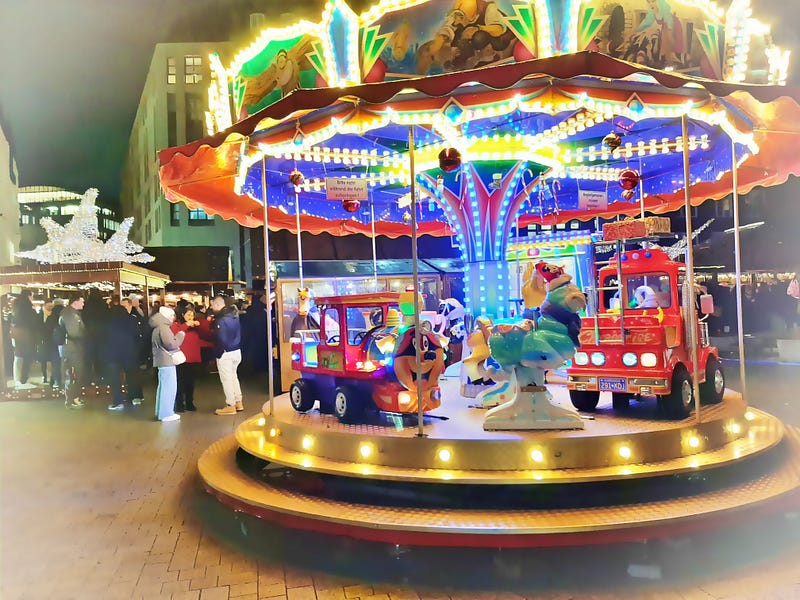
I grab a mug for €4 (+€3 deposit) and position myself where I can watch the protest, which seems to be gearing up to march. “Well, damn… I might just steal the mug… or not. Technically, I paid for it.” I quickly gulp down the hot drink, sacrificing some of the pleasure of sipping a warming beverage. But I managed to finish and return the mug before the demonstration set off.
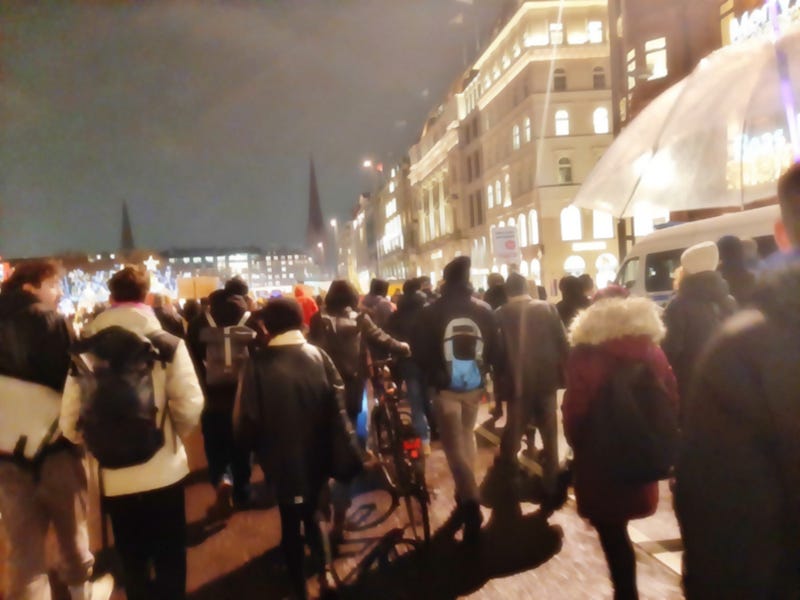
The march heads toward the Hauptbahnhof, through Jungfernstieg, past the Town Hall and St. Peter’s Church, along Mönckebergstrasse — Hamburg’s main shopping street — to the Oberhafenbrücke bridge.
https://maps.app.goo.gl/5JuxSH9st2sBXGpo8
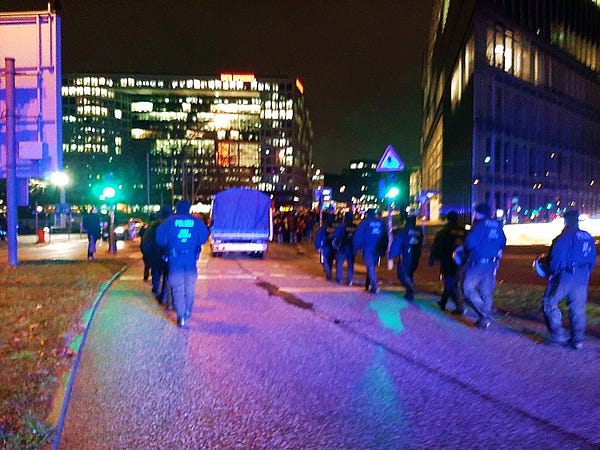
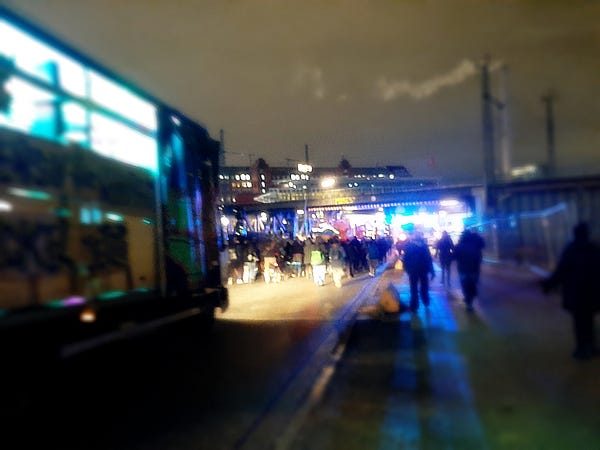
It’s no coincidence that the protest ends here. Nearby, the HafenCity development is being constructed, planned to house around 14,000 people. While social housing is included, it’s a drop in the ocean of needs. The average housing price in HafenCity is utterly out of reach for the poorer residents of Hamburg.
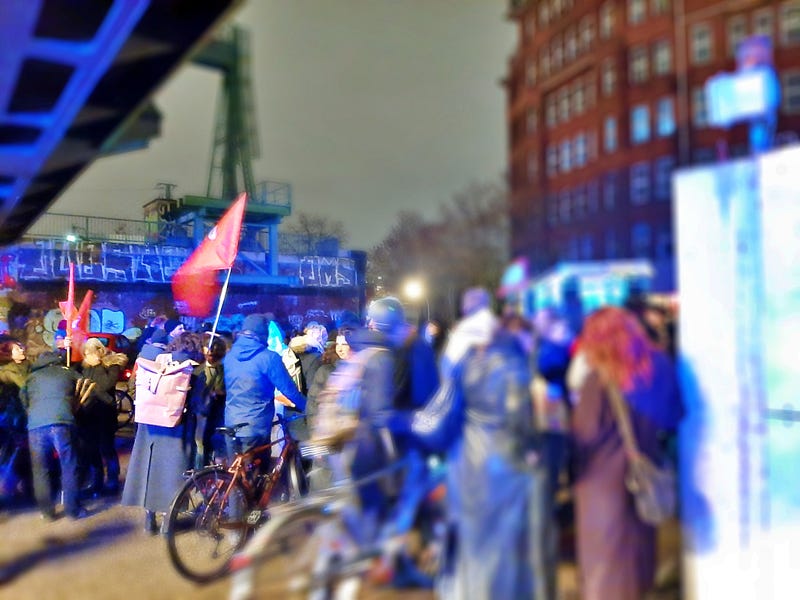
It’s 7 PM when the demonstration ends. In an hour, a panel discussion on housing will take place at the nearby Beat Boutique Club on Altländer Street. Since I wouldn’t understand a word of it, and I still have over an hour’s journey by two trains plus a six-kilometer walk through the forest, I head briskly to the station.
If you enjoyed this article, you can treat me to a virtual coffee.

Did you like this text? Do you want more similar ones? Support my blog
- Zaloguj lub zarejestruj się aby dodawać komentarze